

Modern Wall Sconces: The Complete Guide to Choosing and Styling Them in Every Room
Wall sconces solve the hardest lighting problem in any room: providing light where the ceiling can't reach. Flanking a bed, framing a mirror, marking a hallway, or adding a reading light in a corner — sconces do work that recessed lights and floor lamps can't replicate. This guide covers placement rules, mounting heights, the difference between reading-focused and ambient sconces, and how to choose and install them in every room.
How Wall Sconces Work Differently from Other Lighting
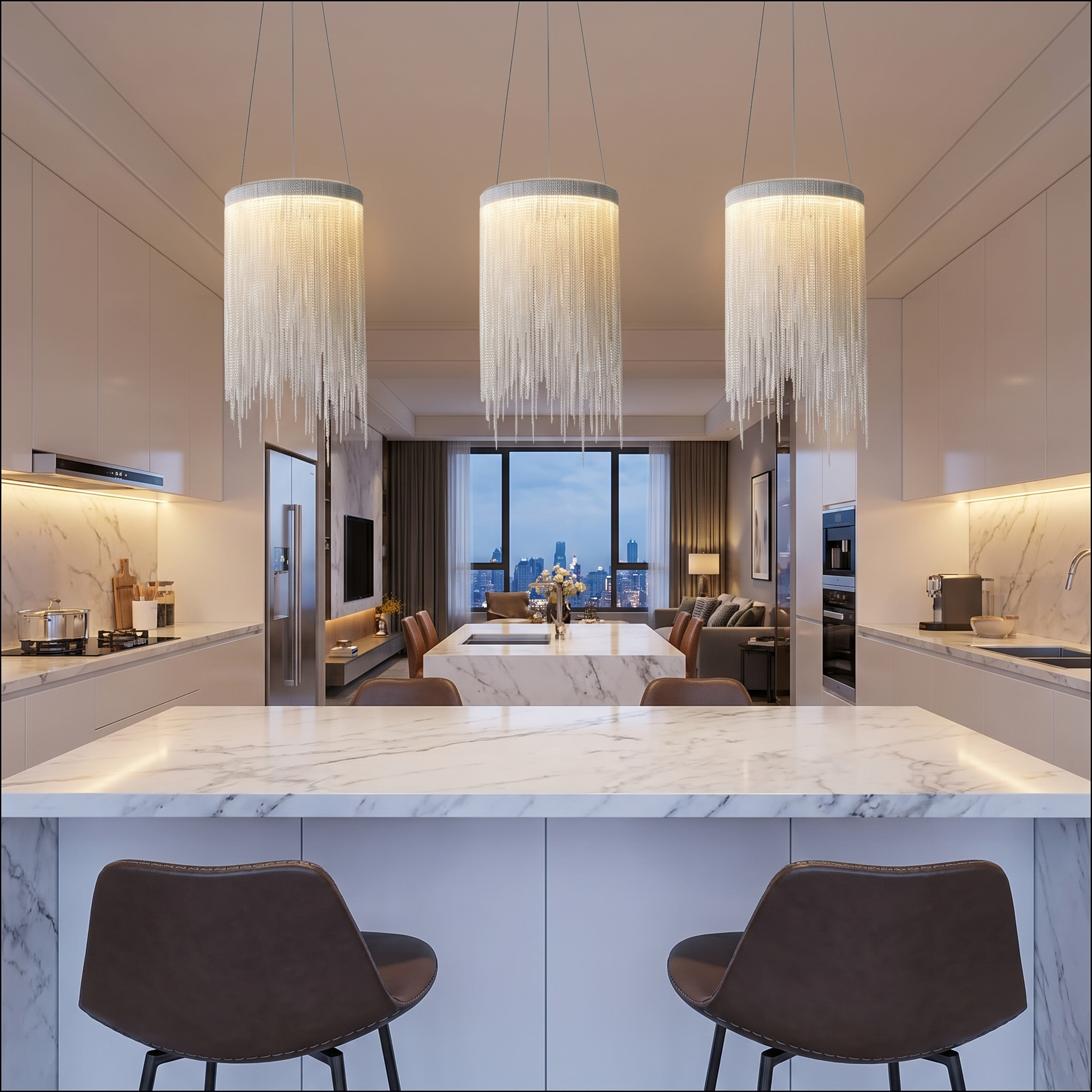
Most lighting starts from above — ceiling fixtures, recessed lights, pendants. Sconces add a mid-level light source that changes the room's light quality in two specific ways:
- They light vertical surfaces: Wall-level light illuminates walls, artwork, and architectural features. Ceiling-down light doesn't do this.
- They create depth and dimension: Multiple light sources at different heights make a room feel layered rather than flatly lit from above.
The practical result: rooms with only ceiling lights look two-dimensional. Add sconces, and the same room immediately feels more intentional and more residential.
Mounting Height: The Rule That Almost Everyone Gets Wrong
The standard mounting height for wall sconces is 60–72 inches from the floor — measured to the center of the fixture. This is roughly eye level for most adults when standing, which is the correct position for ambient sconces.
Exceptions by room type:
- Bedside sconces: 24–30 inches above the mattress surface, or 56–60 inches from the floor for standard mattress heights. This positions the light at reading level when sitting up in bed.
- Over bathroom mirror: Center the fixture at 78–80 inches from the floor (face-level when standing), or 4–8 inches above the mirror frame.
- Hallway sconces: 66–72 inches from the floor — high enough to clear the sight line but low enough to illuminate the path. Space them every 6–8 feet along longer hallways.
- Flanking a fireplace: 72–78 inches from the floor, positioned roughly 12–18 inches to either side of the mantel edge.
Sconce Types and What Each Does Best
Reading Sconces
Adjustable-arm or swing-arm sconces that direct light onto a reading surface. Essential for bedside use — they eliminate the need for bedside table lamps, which frees up the table surface. Best position: lamp center at shoulder height when sitting in bed, arm extending toward the book or screen. Look for dimmable LEDs at 2700K–3000K.
Crystal and Decorative Sconces
Ambient sconces that contribute to the room's aesthetic as much as its illumination. The Brilliant Crystal Wall Sconce in gold finish does this well — crystal detail that catches light and adds sparkle to a wall surface, not just a task-lighting source. Best used flanking a mirror, framing a doorway, or as accent light in hallways and entryways.
LED Disc and Geometric Sconces
Contemporary sconces with integrated LED and geometric forms. The Aurora Borealis Modern Dual-Disc LED Wall Sconce is a strong example: a dual-disc chrome form with integrated LED that reads as sculpture on the wall as much as a light source. If you love the polished-metal look, our complete guide to chrome wall lights covers finishes, placement, and styling. Works in contemporary bedrooms, minimalist living rooms, and transitional hallways.
Glass and Globe Sconces
Enclosed globe or glass shade sconces. Good for areas where dust accumulation is a concern (hallways, bathrooms) since the enclosed shade protects the bulb. Available in clear, frosted, and seeded glass.
Bedroom Sconces: A Complete Setup Guide

Bedside sconces are the highest-impact bedroom upgrade for lighting. Here's the complete setup:
Position: Mount on the wall beside each side of the bed, centered with the pillow height, approximately 24–30 inches above the mattress top surface. If the headboard is tall, mount 6–8 inches above the headboard instead.
Switch: Each sconce should be individually switched — ideally with a wall switch at the bedroom door plus a secondary switch or dimmer accessible from bed. Smart bulbs or smart switches make this easier without rewiring.
Projection: The sconce should direct light down and slightly outward — directly at reading material — not straight out from the wall (which creates glare for the other occupant).
Pairing: Use matching sconces on both sides for a formal, symmetrical look. Mismatched sconces can work in eclectic rooms, but they should share a metal finish or color.
Living Room Sconces
In living rooms, sconces typically serve as accent lights and contributors to the room's overall layered lighting, rather than primary light sources. Common placements:
- Flanking a focal point: On either side of a fireplace, an artwork, or a large window. Provides framing light that highlights the focal element and adds depth to the wall.
- Above sofa height: On the wall above the sofa back at 70–76 inches from the floor. Creates ambient wash light that makes the seating area feel defined without using a floor lamp.
- In alcoves and niches: Sconces in architectural recesses amplify the depth effect of the niche. Use uplighting direction for dramatic shadows.
Bathroom Sconces: Vertical vs. Horizontal Placement
Bathroom mirror lighting is a specific use case. The rule:
- Side-mounted (vertical) sconces: Best for face-level illumination with no shadows under the chin or in eye sockets. Mount at 60–65 inches from floor, centered on the sconce, on either side of the mirror. 18–24 inches apart is ideal for a standard 24-inch mirror.
- Above-mirror (horizontal bar): The common option in many bathrooms, but delivers face lighting with downward shadows that are unflattering. A bath bar at 78–80 inches above the floor minimizes this, but side-mounting is still superior for makeup application and grooming.
Wiring: Hardwired vs. Plugin Sconces
Hardwired sconces require existing in-wall wiring at the mounting location, or a new wire run by an electrician. They produce a clean, cord-free installation that looks intentional. Plugin sconces are far easier to install (just drill a mounting screw and plug in) but leave a visible cord — some designs include a cord cover, others don't.
For rental properties or temporary installations: plugin sconces are the right choice. For permanent installs: hardwired is worth the electrician cost for the clean result.
Top Wall Sconces at Hausgem
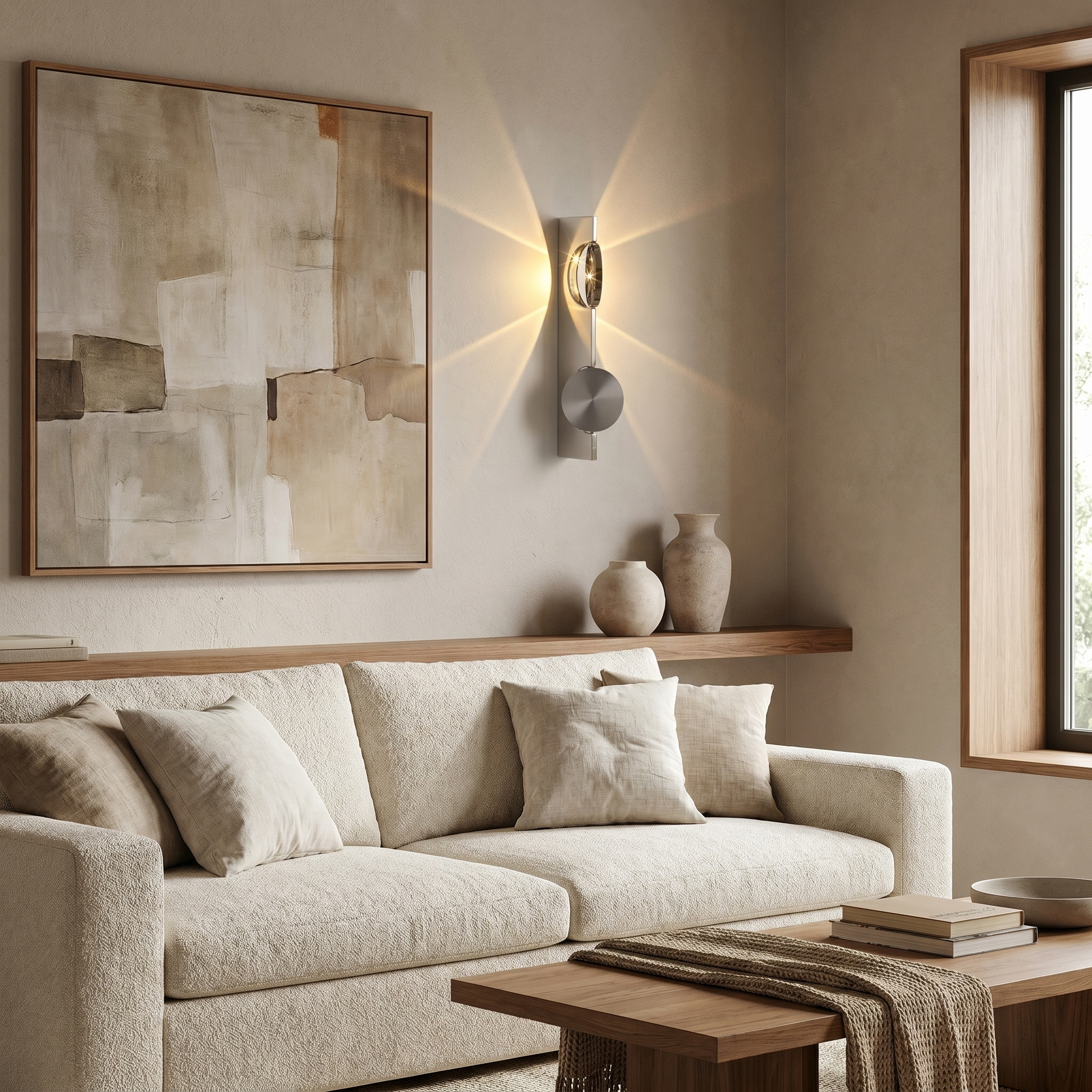
- Aurora Borealis Dual-Disc LED Wall Sconce — Chrome dual-disc design, integrated LED, geometric contemporary aesthetic. Works in bedrooms, hallways, and living rooms.
- Brilliant Crystal Wall Sconce — Gold finish, crystal detail, ambient accent light. Best for entryways, dining rooms, and formal living rooms.
- Celestria Golden Glass Wall Sconce — Glass globe with gold frame, transitional to contemporary style. Works in bathrooms and bedrooms.
- Althea Elegant Embrace Wall Light — Gold and glass form, upward-facing light for dramatic ambient effect. Best used in pairs flanking a focal point.
- Aqua Plant Wall Lamp — Unique form, doubles as a planter and light source. A statement piece for Botanica Luxe and contemporary interiors.
FAQ: Modern Wall Sconces
What height should wall sconces be mounted?
The standard mounting height is 60–72 inches from the floor to the center of the fixture for general ambient use. Bedside sconces mount lower at 56–60 inches from the floor (24–30 inches above the mattress). Bathroom sconces flanking a mirror mount at 60–65 inches from the floor. Hallway sconces typically go at 66–72 inches.
How far apart should sconces be placed when flanking something?
When flanking a mirror, fireplace, or artwork, sconces should be positioned 12–18 inches from the center edge of the flanked element. For a 36-inch mirror, the sconces would be 18–27 inches apart (measured center to center of the fixtures). The goal is framing, not covering — the sconces should be visible, not hidden by the element they're flanking.
Do wall sconces need their own circuit?
Not necessarily, but they need to be on a circuit with sufficient capacity. Most residential circuits are 15A/120V, which supports up to 1,800W of continuous load. Modern LED sconces draw 5–20W each, so you can run many sconces on a single circuit without concern. The more important issue is having a switch in a convenient location — especially for bedside sconces.
Can I install wall sconces without professional help?
Plugin sconces require only a drill and a wall anchor — no electrical knowledge needed. Hardwired sconces require basic wiring skills: turning off the breaker, connecting neutral/hot/ground wires, and securing the mounting bracket. If there's no existing outlet at the desired location, running new wire requires professional skills or hiring an electrician.
Should bedroom sconces point up or down?
For reading, point down — light should fall on the book or screen, not on the ceiling. For ambient atmosphere, an upward-pointing or diffused sconce creates a warmer, more indirect light. Many contemporary sconces offer both options with adjustable arms. For a dedicated bedside reading light, prioritize downward directionality with a dimmable LED at 2700K–3000K.
What's the difference between a wall sconce and a wall light?
The terms are used interchangeably in most contexts. Technically, "sconce" historically referred to a wall-mounted candleholder with a reflective back plate. Today, both terms describe any wall-mounted light fixture that's not a recessed downlight. The design community typically uses "sconce" for decorative or ambient wall fixtures and "wall light" as the broader category that includes utility and task-focused options.