

Modern Pendant Lights for Kitchen Islands: The Complete Buying Guide
Pendant lights over a kitchen island do more than illuminate the workspace — they anchor the kitchen's visual identity and bridge the gap between function and design. Get the sizing, height, and spacing wrong, and even a well-designed kitchen looks unfinished. This guide covers every variable, from single oversized pendants to multi-pendant clusters, with specific sizing formulas for every island length.
How Many Pendants Do You Need?
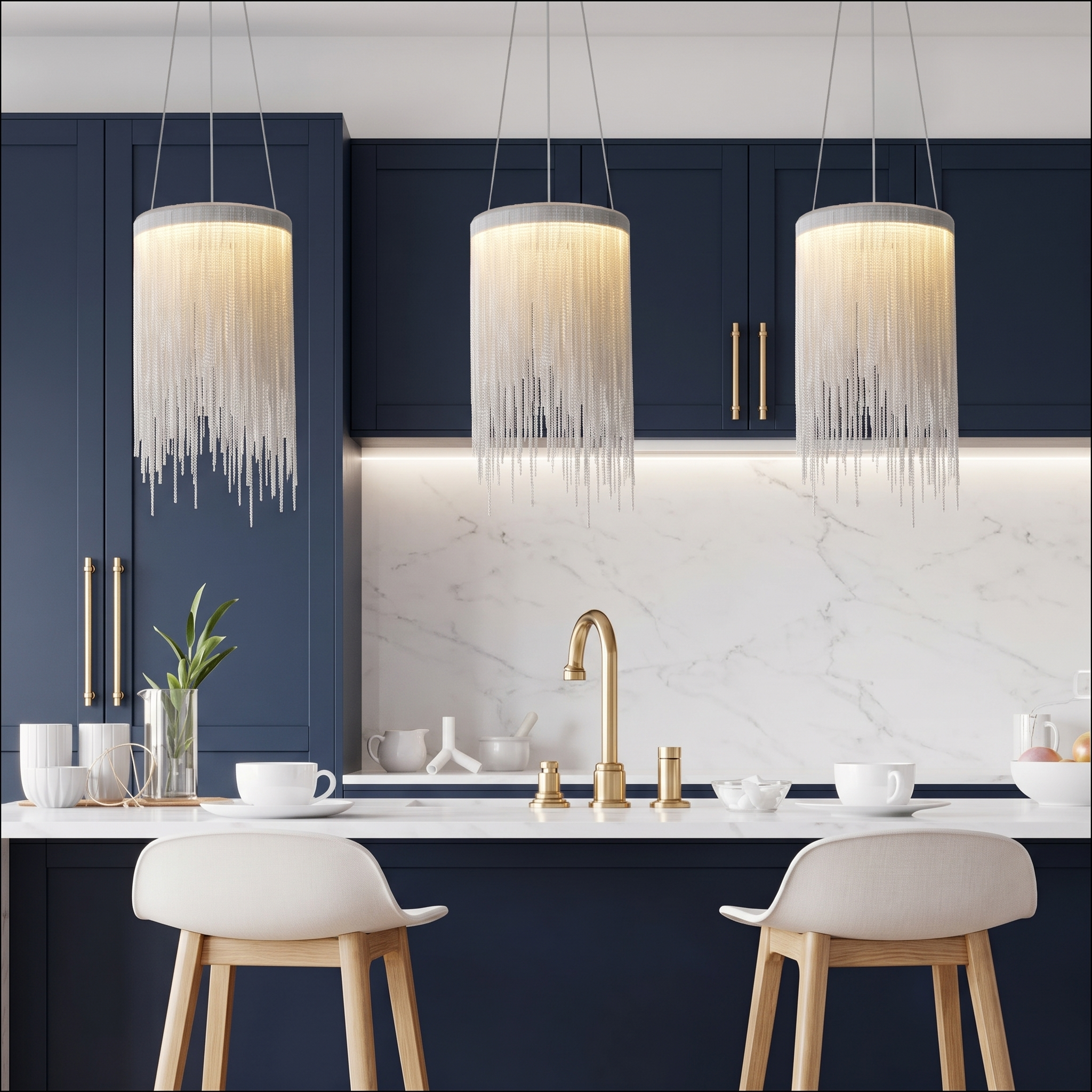
The number of pendants depends on island length, pendant diameter, and desired coverage:
- Island under 4 ft (48 inches): 1 pendant, centered
- Island 4–6 ft (48–72 inches): 2 pendants, evenly spaced
- Island 6–8 ft (72–96 inches): 2–3 pendants, depending on pendant size
- Island over 8 ft: 3 pendants minimum, or a linear chandelier spanning the island
The general spacing rule: pendants should be 24–30 inches apart from center to center, and at least 6–12 inches from the island end. For a 60-inch island with 2 pendants: first pendant at 15 inches from one end, second pendant at 15 inches from the other end (30 inches apart).
Height: The Number That Changes Everything
Pendant height over a kitchen island is 30–36 inches above the countertop for most situations. This puts the pendant bottom above seated eye level (important if there's bar seating) while still delivering useful task lighting on the counter surface.
Variables that affect height:
- Ceiling height: Higher ceilings warrant pendants hung slightly lower (closer to 36 inches from counter) to avoid the light source feeling disconnected
- Pendant opacity: Open-cage or transparent pendants can hang a bit higher (36–38 inches) since light disperses more freely; opaque shades should stay closer to 30–32 inches
- Bar seating: If people sit at the island, ensure the pendant bottom is at or above eye level when seated (typically 56–60 inches from floor = 14–18 inches above countertop for seated clearance)
Pendant Styles That Work Over Kitchen Islands
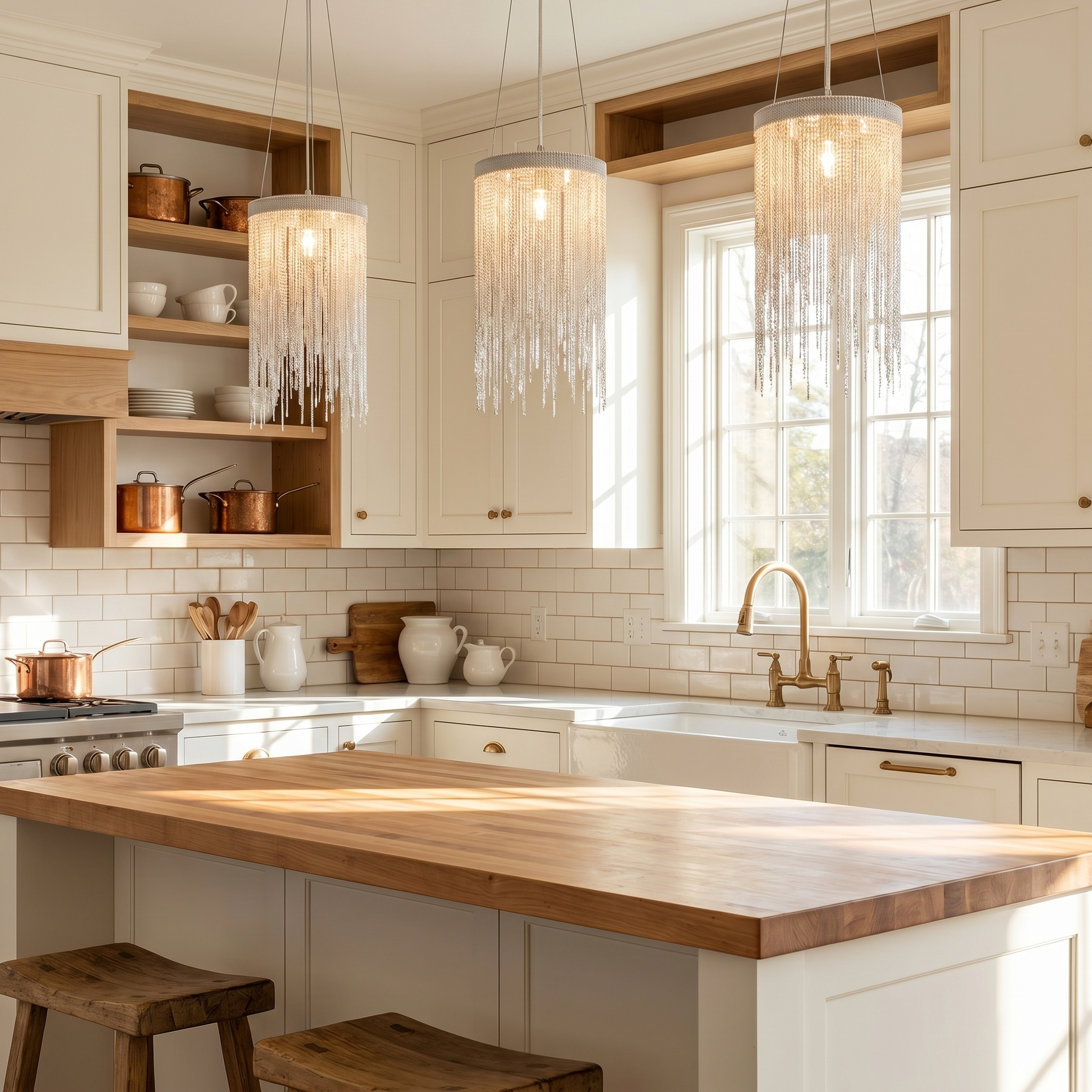
Crystal and Glass Pendants
Crystal and glass pendants bring the kitchen into a more refined design territory. They work best in kitchens with quality finishes — quartz or marble countertops, painted cabinetry, high-quality hardware. The Cassian Crystal Candle Pendant Chandelier translates the drama of a dining room chandelier into a pendant-appropriate format — individual crystal detail on a clean brass frame. Use in pairs or threes over an island.
Industrial and Cage-Style Pendants
Open metal cage pendants work in kitchen remodels with exposed brick, concrete counters, or dark cabinetry. The open frame allows light to spill in multiple directions, which improves task lighting on the counter. Usually 10–16 inches in diameter, hung 30–34 inches above the counter.
Schoolhouse and Globe Pendants
The classic option: a glass globe or schoolhouse shade pendant. Works in transitional kitchens (between traditional and contemporary). Available in white, clear, and seeded glass. Best when paired with period-appropriate hardware (chrome or nickel for transitional, brass or oil-rubbed bronze for more traditional).
Linear Chandeliers Over Islands
For islands over 6 ft, a linear chandelier replaces the multi-pendant arrangement. Advantages: one mounting point instead of multiple, even light distribution, cleaner look. Linear fixtures should be 2/3 the island length — for a 72-inch island, a 48-inch linear chandelier is the target.
Matching Pendants to Your Kitchen Style
The pendant style should speak the same design language as the kitchen's other elements:
| Kitchen Style | Pendant Direction | Finish |
|---|---|---|
| Modern white/grey | Minimal globe, matte black cage | Matte black, brushed nickel |
| Transitional | Schoolhouse, drum shade | Chrome, nickel, brushed gold |
| Contemporary luxury | Crystal pendant, glass globe | Gold, polished brass |
| Farmhouse | Barn pendant, metal shade | Black, oil-rubbed bronze |
| Scandinavian | Simple cone or dome shade | Matte black, brass, white |
Wiring Considerations for Multi-Pendant Setups
If you're adding pendants where none existed before, you'll need an electrician to run wire and install ceiling boxes at the correct spacing. Plan this before the kitchen is finished — it's much harder to add after cabinets and countertops are in.
For existing installations: many pendants are sold in multi-light kits that run from a single junction box on a canopy plate, with individual pendant cords dropping to different heights. These avoid the need for multiple ceiling boxes and are the more practical solution for most retrofits.
The Dimmer Rule
Kitchen island pendants must be on a dimmer. Task lighting for food prep at full brightness is very different from ambient lighting during a dinner party at the island — having both modes on a single switch and a single circuit is one of the most high-value kitchen upgrades available for under $50 in switch cost.
Common Mistakes When Choosing Kitchen Island Pendants
Most installation regrets trace back to decisions made before purchase, not during installation:
- Going too small: Pendants that look proportional on a product page can disappear over a 7-foot island. Kitchen island pendants should be 10–18 inches in diameter — err larger rather than smaller, especially if the ceiling is above 9 feet.
- Not checking cord length: Many pendants ship with 48–60 inches of cord, sized for standard 9-foot ceilings. If your kitchen has 10- or 12-foot ceilings, confirm the cord is adjustable or long enough before ordering. Most quality pendants bundle the surplus cord inside the canopy, so a 72-inch cord on a 9-foot ceiling isn't a problem — a 48-inch cord on a 12-foot ceiling is.
- Skipping dimmer compatibility: Not all LED pendants are dimmable, and not all dimmable LEDs work with every dimmer switch. An incompatible pairing causes buzzing or flickering at any brightness. Before installing, verify that both the bulb (or integrated LED driver) and the dimmer switch are listed as compatible — the bulb manufacturer's website usually maintains a compatibility list.
- Committing to spacing before marking joists: Pendant canopies need a ceiling box anchored to a joist or a rated adjustable brace. Decide on pendant spacing first, then verify joist positions — even a 2-inch shift is easier to accommodate during planning than after drywall is cut.
If you already know your spacing and height rules and want a ranked, 2026 product shortlist, see our guide to the best pendant lights for kitchen island with eight picks by island length and style.
Top Picks for Kitchen Island Pendant Lights
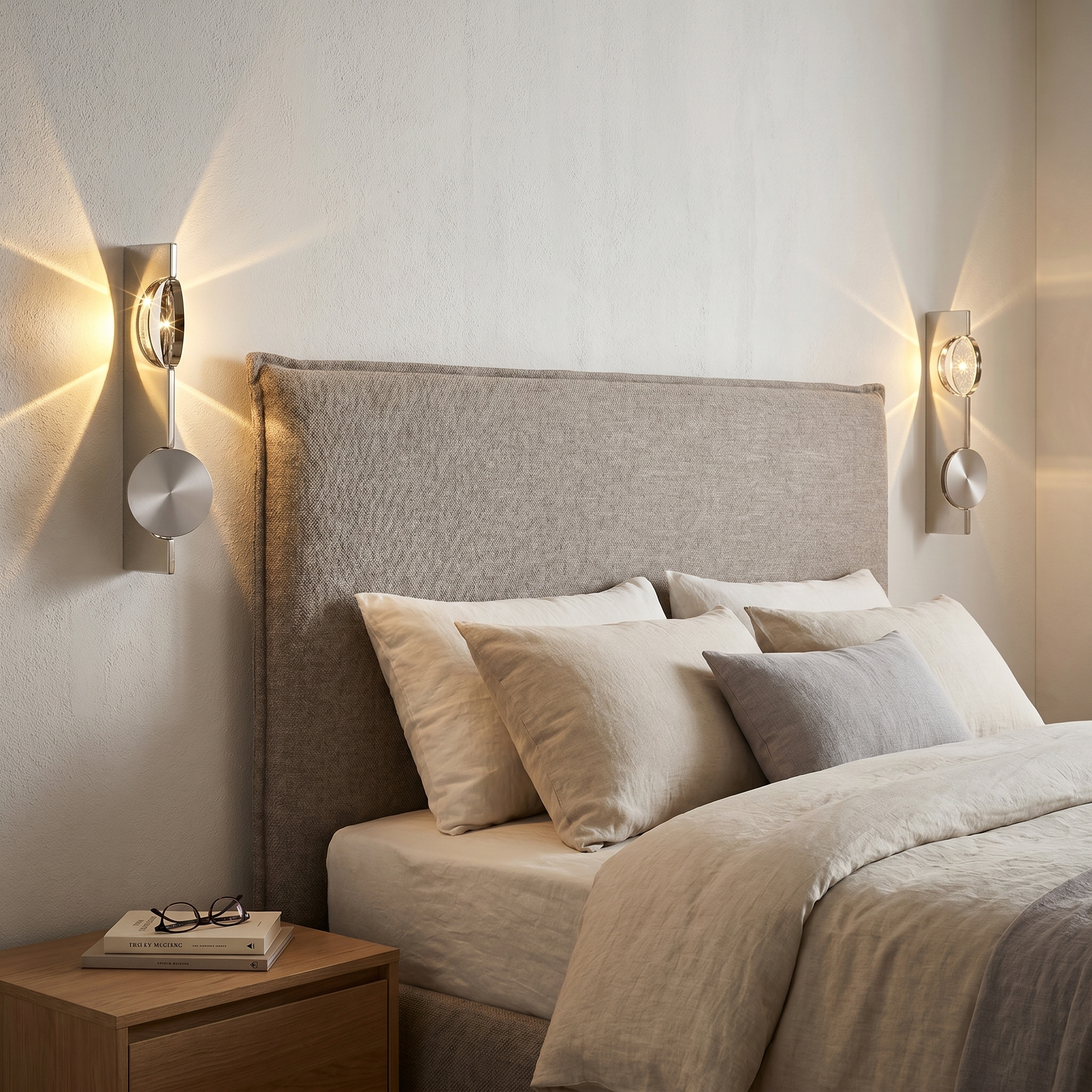
- Cassian Crystal Candle Pendant — Gold and crystal, formal, best paired in sets of 2–3 over 4–6 ft islands. Adds a luxury finish to white or light-cabinetry kitchens.
- Aurora Luxe Modern Crystal LED Chandelier — Can be used as a linear-style centerpiece over large islands in open-plan kitchens. LED-integrated, fully dimmable.
- Cassiopeia Crystal Halo Chandelier — Single pendant option for islands under 4 ft. Clean ring form works in contemporary kitchens.
- Bubble Petal Modern Crystal Chandelier — Statement piece for large islands. Requires ceiling height of 9+ ft. The clustered form reads as bold over a kitchen island.
FAQ: Pendant Lights for Kitchen Islands
How far apart should pendant lights be over a kitchen island?
Pendant centers should be spaced 24–30 inches apart. For a 60-inch island with 2 pendants: position each pendant 15 inches from the nearest end. The first pendant would be at 15 inches from one end, the second at 45 inches (15 inches from the other end). Always measure from the center of the pendant's mounting point, not its edge.
Can I use a chandelier instead of pendants over a kitchen island?
Yes — a linear or ring chandelier works well over kitchen islands, especially longer ones. For islands over 5 ft, a single chandelier that spans the length provides more even light coverage than individual pendants. The fixture should be roughly 2/3 the length of the island and hung at the same 30–36 inch height from the countertop.
What wattage do kitchen island pendants need?
For task lighting over a kitchen island, aim for 50–100 lumens per square foot of counter surface. A 24-inch-wide, 72-inch-long island has 12 sq ft of surface, so 600–1,200 lumens total across all pendants. LED pendants at 8–12W typically produce 700–1,100 lumens, which is right for most kitchen island configurations.
Should kitchen island pendants match the other fixtures?
They don't have to match exactly, but they should share a metal finish. A kitchen with brushed gold hardware and light fixtures in the same finish will look cohesive even if the styles vary slightly between the pendant and the recessed lighting trim. The finish is the unifying element, not the shape.
What's the best height for pendants with bar seating?
With bar-height seating (28–30 inch counter height, 29–30 inch stools), pendant bottoms should be at or above 66 inches from the floor — that's at least 36–38 inches above a 28-inch counter. This keeps the fixture above seated eye level and avoids glare for people seated at the island.
How do I stop pendants from swaying or spinning?
Sway is usually caused by ceiling fans, HVAC vents, or open windows creating air movement. To reduce it: use rigid rod mounts instead of chain or cord if possible, add a swivel canopy to allow controlled movement without spinning, or position the fixture away from direct airflow paths. For cord-hung pendants, a small canopy weight at the cord-to-ceiling junction can help stabilize.