


Modern home lighting in 2026 is defined by one principle: intentional atmosphere. The strongest interiors no longer rely on a single overhead light to do all the work. Instead, thoughtfully layered schemes — combining ambient, task, and accent sources — create rooms that feel equally polished at noon and intimate at midnight. If you are upgrading your home's lighting this year, these are the trends worth understanding and the products worth investing in.
What Defines Modern Home Lighting Trends in 2026?
The shift in 2026 lighting has moved away from overtly decorative statement pieces and toward fixtures that feel curated, architectural, and emotionally resonant. This does not mean boring — it means that the fixture earns its visual weight through form and material rather than embellishment alone.
Five characteristics define the current direction:
- Layered lighting that blends ambient, task, and accent sources into a cohesive scheme
- Sculptural fixtures with architectural presence — organic forms, considered geometry
- Warm, flattering tones (2700K–3000K) that prioritize livability over brightness
- Tactile materials: opal glass, hand-blown clear glass, brushed brass, matte black, polished chrome
- Fixtures designed for dimmer systems, enabling mood-responsive control throughout the day
The aesthetic result is quiet luxury — rooms that feel refined without announcing the effort that went into them.
Layered Lighting: The Foundation of Every Modern Interior
Layering is the single most impactful upgrade available to any homeowner. A room with only one overhead light source will always feel flat, regardless of how beautiful the fixture is. Layering solves this.
The three layers are:
- Ambient lighting — the base layer. Provides overall illumination. Usually delivered by a chandelier, flush mount, or recessed ceiling lights. Should always be on a dimmer.
- Task lighting — targeted, functional. Under-cabinet strips in a kitchen, a reading light beside a bed, a desk lamp in a home office. Brightness matters more here than aesthetics.
- Accent lighting — the layer that creates drama. Wall sconces, picture lights, LED strip lights inside shelving, small uplights behind plants or sculptures. This layer shapes the room's mood and makes it feel three-dimensional.
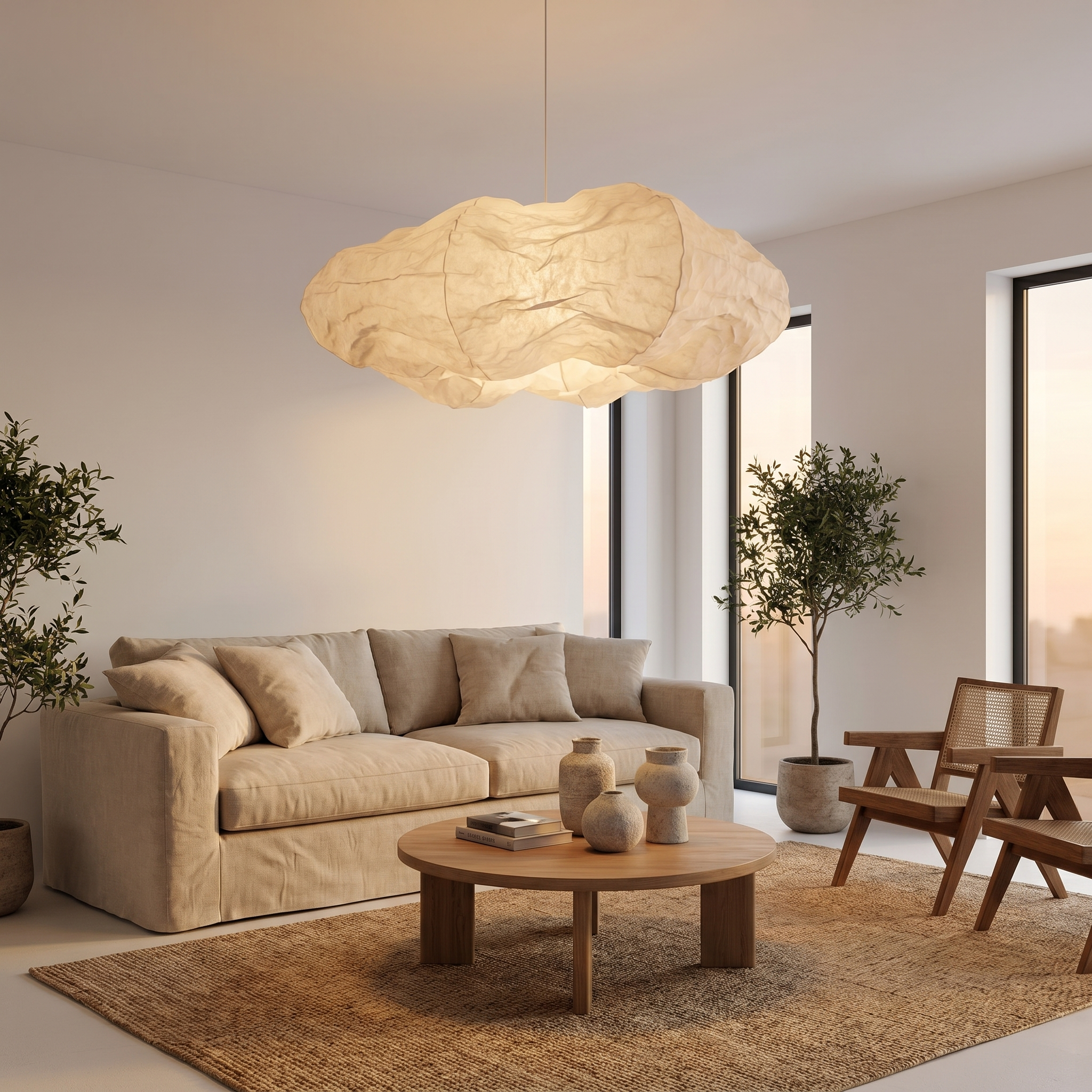
In practice: a living room with only recessed downlights feels like an office. The same room with recessed lights dimmed to 40%, a pair of wall sconces at 70%, and a floor lamp beside the sofa at 100% feels warm, layered, and residential.
The Cloud – Pendant Chandelier ($150) is an excellent ambient layer anchor for living rooms and dining areas — its soft, diffused globe form provides even light without glare and works with any surrounding accent layer you build.
Sculptural Chandeliers and Pendant Lights
The chandelier has shifted from purely decorative to architecturally considered. The most compelling fixtures in 2026 have a strong graphic silhouette when the lights are off, not just when they are on. They hold the room during the day as objects, not just at night as light sources.
Styles gaining momentum:
- Organic and botanical forms — irregular, nature-inspired shapes in glass or sculptural metal. These sit at home in Japandi interiors, biophilic design, and any room with significant natural materials.
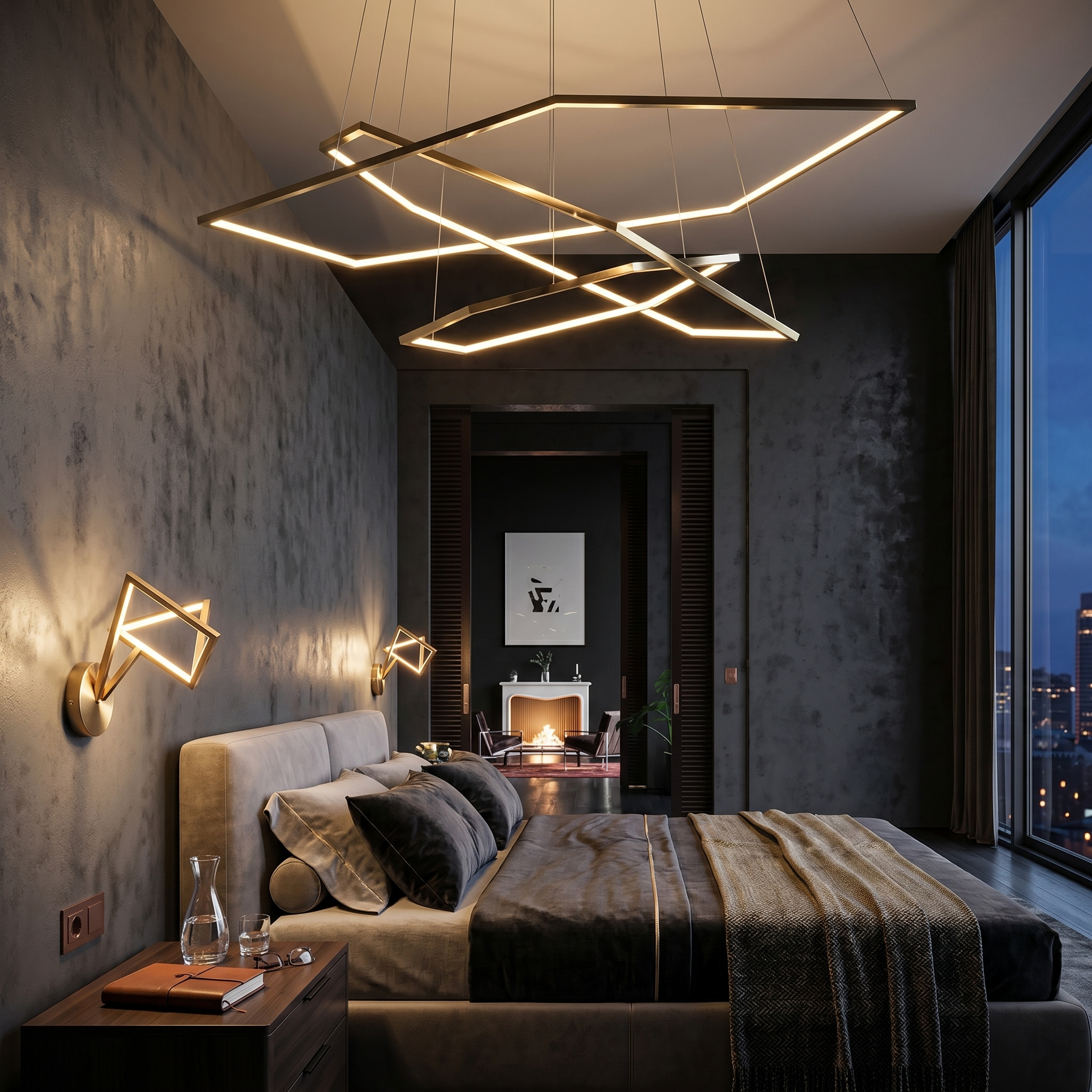
- Ring and halo chandeliers — geometric, architectural, LED-integrated. Clean lines that read as modern without dating quickly.
- Cascading glass droplet styles — multiple glass elements at varied heights create movement and softness. These perform particularly well in dining rooms and double-height spaces.
The Aurelius – Golden Orbit LED Chandelier ($265) exemplifies the sculptural ring direction — a circular LED form in gold that holds its visual weight during the day and distributes even, dimmable light at night. For rooms that need a stronger vertical presence, cascading forms like the Aurorae – Crystal Halo Chandelier ($654) fill ceiling height while maintaining restraint in their material palette.
Wall Sconces: The Accent Layer That Changes Everything
If there is one product category that consistently upgrades an interior with minimal effort, it is the wall sconce. Sconces add architectural rhythm to bare walls, create warm pools of light at human scale, and free up floor space that floor lamps would otherwise occupy.
2026 sconce directions:
- Plug-in sconces — no electrician required, movable, flexible for renters and owners who want to experiment before committing to hard-wired placement
- Swing-arm and adjustable — functional bedside lighting with design intent, replacing the ubiquitous table lamp for homeowners who want a cleaner visual floor
- Statement botanical sconces — particularly relevant for the growing Botanica Luxe interior trend, which combines living plants with sculptural light fixtures to create biophilic accent walls
The Aqua – Plant Wall Lamp ($239) is among Hausgem's top-selling products for good reason — it merges ambient light with a planter, creating a living wall accent that works as accent lighting and interior planting simultaneously. This is practical biophilic design at its most resolved.
Warm Tones and Color Temperature
Color temperature — measured in Kelvin — is one of the most underestimated decisions in a lighting project. The difference between 2700K and 4000K in a residential space is the difference between a room that feels like a home and one that feels like an office.
| Color Temperature | Appearance | Best Use |
|---|---|---|
| 2700K (warm white) | Amber, incandescent-like | Living rooms, bedrooms, dining rooms |
| 3000K (soft white) | Warm, slightly cooler than 2700K | Kitchens, bathrooms, home offices |
| 3500K (neutral white) | Clean, balanced | Task lighting, retail-style display |
| 4000K (cool white) | Bright, slightly blue-toned | Garages, utility rooms, commercial spaces |
| 5000K+ (daylight) | Blue-white, energizing | Art studios, photographic work areas |
For living rooms, dining rooms, and bedrooms, commit to 2700K. It is the standard that luxury hotels use because it makes people and spaces look their best. For kitchens and bathrooms where task accuracy matters, 3000K is appropriate.
The Ayden – Modern Brass LED Table Lamps ($150) ship with 2700K integrated LEDs — the correct specification for living room and bedroom accent lighting that complements rather than competes with warmer ambient sources.
Modern Chandelier Lighting for Small Spaces
Small spaces — studios, apartments, rooms with lower ceilings — benefit from chandelier lighting more than they suffer from it, provided the scale is correct. The common fear is that a chandelier makes a small room feel smaller; the reality is the opposite when properly sized.
Rules for small-space chandelier lighting:
- Use the room formula (length + width in feet = diameter in inches) and respect it
- Choose fixtures with an upward-opening silhouette rather than cascading downward forms — this draws the eye up and creates the perception of height
- Mount flush or semi-flush in rooms with 8-foot or lower ceilings to avoid the chandelier hanging too close to head height
- Choose integrated LED rather than bulb-visible designs — cleaner visual result in tight spaces
- Prefer opal glass or diffused globe shades that distribute light evenly rather than directing it downward
The Cloud – Pendant Chandelier ($150) works well in compact dining spaces and studio apartments because its soft globe form distributes light in all directions, making small rooms feel illuminated rather than spotlit.
Botanica Luxe: Where Lighting Meets Living Plants
One of 2026's most distinctive residential design directions merges indoor plants with lighting fixtures into integrated accent walls and corner installations. This is not just a trend — it responds to documented research on biophilic design's impact on wellbeing, productivity, and stress reduction.
In practice, this means pairing pendant or wall-mounted fixtures with plant holders, creating compositions where light and living material coexist at the same point in a room. The visual effect is both natural and sculptural — a corner or wall section that functions as art.
The Aqua – Plant Wall Lamp ($239) is built specifically for this application, with a wall-mounted planter integrated into a glowing LED vessel. Pairs of Aqua units create symmetrical accent walls that double as living art installations and task-appropriate accent lighting.
The Hausgem Approach to Modern Lighting
At Hausgem, the collection is built around one conviction: lighting should be as refined as every other design decision in the room. The best schemes are not loud — they are deliberate. They guide the eye, shape the mood, and make every room feel more complete.
The practical checklist for a modern home lighting upgrade:
- Map your layers: identify which rooms are missing task or accent light
- Audit your color temperature: replace any 4000K+ bulbs in living spaces
- Add a dimmer to your main ambient fixture if it does not already have one
- Choose one room for a sculptural chandelier upgrade this year
- Introduce wall sconces to a currently sconce-free living room or bedroom
Each of those five steps changes how a room feels without a renovation.
Frequently Asked Questions
What is the most important lighting trend in 2026?
Layered lighting — combining ambient, task, and accent sources in every room — is the single most impactful shift in modern home lighting. A room with only one light source will always feel flat. Layering with dimmable fixtures at multiple heights and positions creates the depth, mood, and flexibility that characterize contemporary interiors.
What color temperature should I use for living room lighting?
2700K warm white is the standard for living rooms, dining rooms, and bedrooms in residential design. It mimics the quality of incandescent light, making spaces and people look their best. Avoid 4000K or cooler bulbs in living areas — they read as clinical and flatten the warmth of interior materials like wood and textiles.
Do I need an electrician to add accent lighting?
Not necessarily. Plug-in wall sconces, battery-operated picture lights, and LED strip systems that use adhesive mounting require no wiring and no electrician. These are legitimate, high-quality accent lighting options — not compromises. Reserve hardwired installation for permanent fixtures like ceiling chandeliers.
What is Botanica Luxe lighting?
Botanica Luxe is an interior trend that integrates living plants with light fixtures — typically wall-mounted planters with built-in LED illumination, or pendant lights positioned to highlight and complement large indoor plants. The effect is biophilic and sculptural simultaneously. Products like the Aqua Plant Wall Lamp were designed specifically for this application.
How do I choose a chandelier for a low-ceiling room?
For rooms with 8-foot or lower ceilings, choose flush-mount or semi-flush chandeliers that sit within 12 inches of the ceiling. Avoid hanging pendants with long suspension rods. Select fixtures with an upward-opening silhouette to draw the eye toward the ceiling and create the perception of height. Integrated LED designs work cleanest in tight ceiling clearances.
How many lights should a living room have?
A well-lit living room typically needs 4–6 sources: one ambient fixture (chandelier or flush mount), two to four accent sources (sconces, floor lamp, table lamps), and task lighting where reading or work occurs. The exact number depends on room size and natural light; the principle is that no single light should do all the work.

