


A modern chandelier transforms a room from functional to statement-making. Whether you're replacing a dated fixture or fitting a new build, this guide covers every decision: sizing by room, ceiling height rules, style matching, wiring basics, and the specific chandeliers worth considering at each price point.
What Makes a Chandelier "Modern"?
Modern chandelier lighting is defined by three traits: clean geometry, intentional materials, and light that works without being decorative in an excessive way. Think linear frames in matte black or brushed gold, sculptural arms without excessive ornamentation, and LED-integrated designs that eliminate visible bulbs entirely.
The shift from traditional to modern is mostly about silhouette. Traditional chandeliers use curved arms, candle bulbs, and heavy crystal draping. Modern versions invert this: straight lines, suspended rods, minimal crystal (or none), and often a single bold geometric shape—ring, cylinder, disc, or abstract cluster.
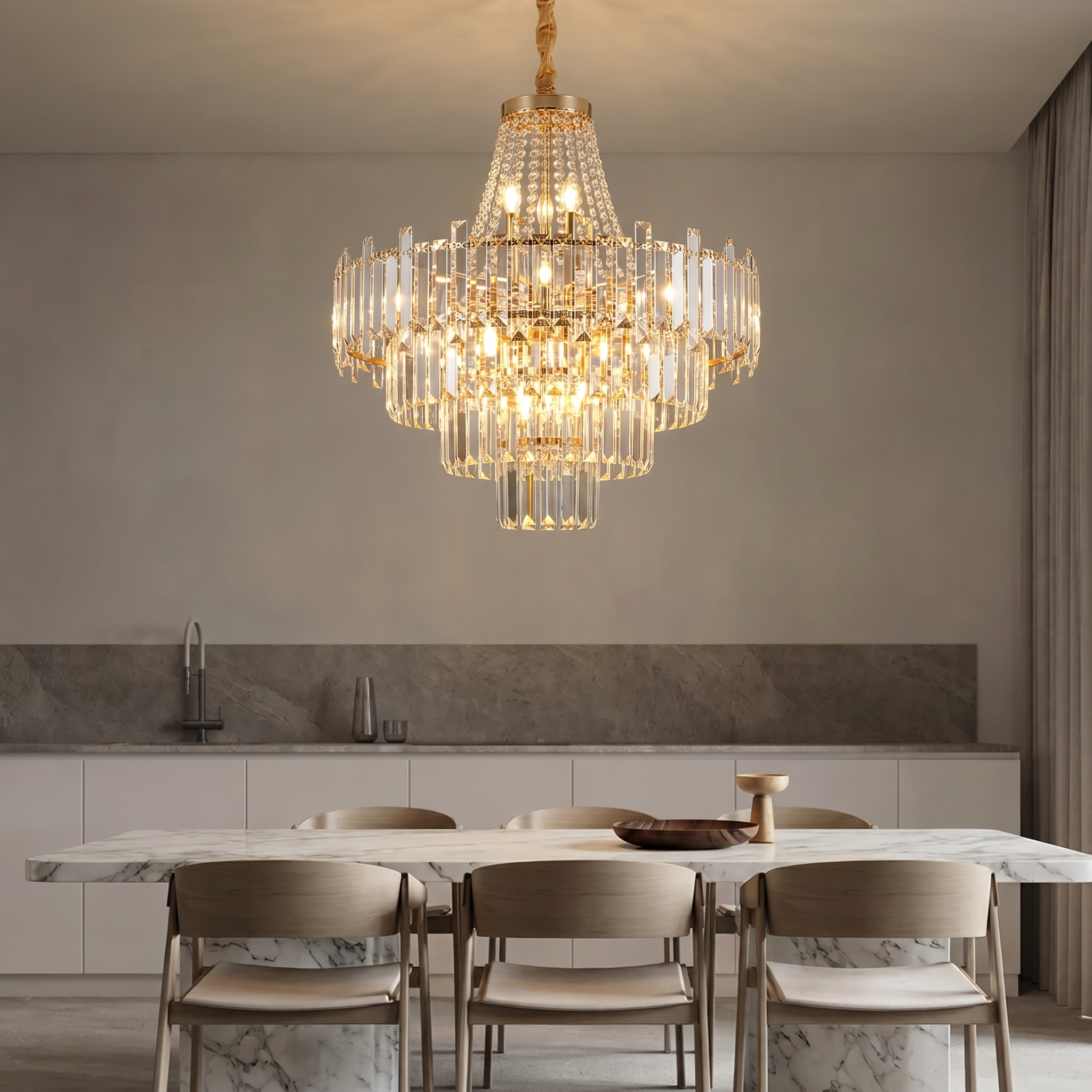
Crystal still appears in modern lighting, but differently. Instead of full cascading tiers, you get precise accent clusters or individual drops that catch light without dominating. The Cassiopeia Crystal Halo Chandelier does this well: crystal drops are suspended from a clean gold ring rather than layered up a traditional frame.
How to Size a Chandelier for Any Room
Sizing is where most buyers go wrong. A chandelier that looks stunning in a product photo can feel miniature in a large room or overwhelming in a small one.
Diameter rule for rooms: Add the room's length and width in feet. The sum (in inches) gives you the recommended chandelier diameter. A 12 × 14 ft room → 26-inch diameter chandelier.
Dining table rule: The chandelier should be 12 inches narrower than the table on each side. For a 48-inch table, aim for 24–30 inches in diameter.
Ceiling height rules:
- 8 ft ceilings: chandelier bottom should hang no lower than 7 ft from floor
- 9 ft ceilings: aim for 7.5 ft clearance
- 10 ft ceilings: 8 ft clearance
- For every foot above 10 ft, add 3 inches of additional hanging height
Entry halls and stairwells break the standard rule — the fixture should hang at least 6–7 ft above the lowest floor level you'll walk under.
Modern Chandelier Styles and Where Each Works Best
Not all modern styles read the same across different rooms. Here's how to match style to space:
Ring and Halo Chandeliers
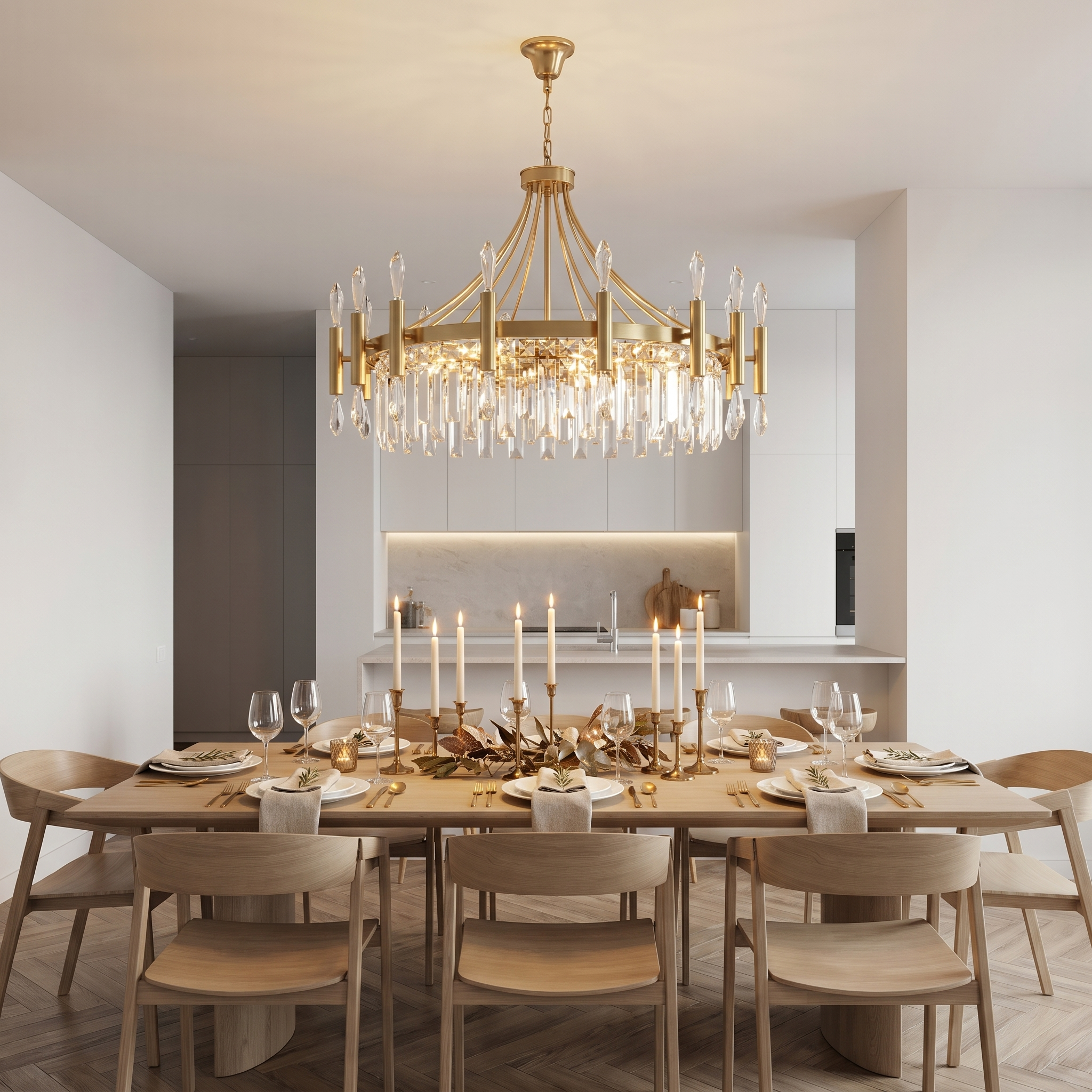
Single or double rings in gold, chrome, or black. Minimal, architectural, and functional. Best for: dining rooms, open-plan kitchens, office spaces. The Aurorae Crystal Halo Chandelier pairs a gold ring frame with crystal accents — formal enough for dining, modern enough for contemporary interiors.
Linear and Rectangle Chandeliers
Long horizontal fixtures designed for tables and kitchen islands. Usually 36–60 inches wide. Best for: rectangular dining tables, kitchen islands with bar seating, conference-style spaces.
Sculptural and Organic Forms
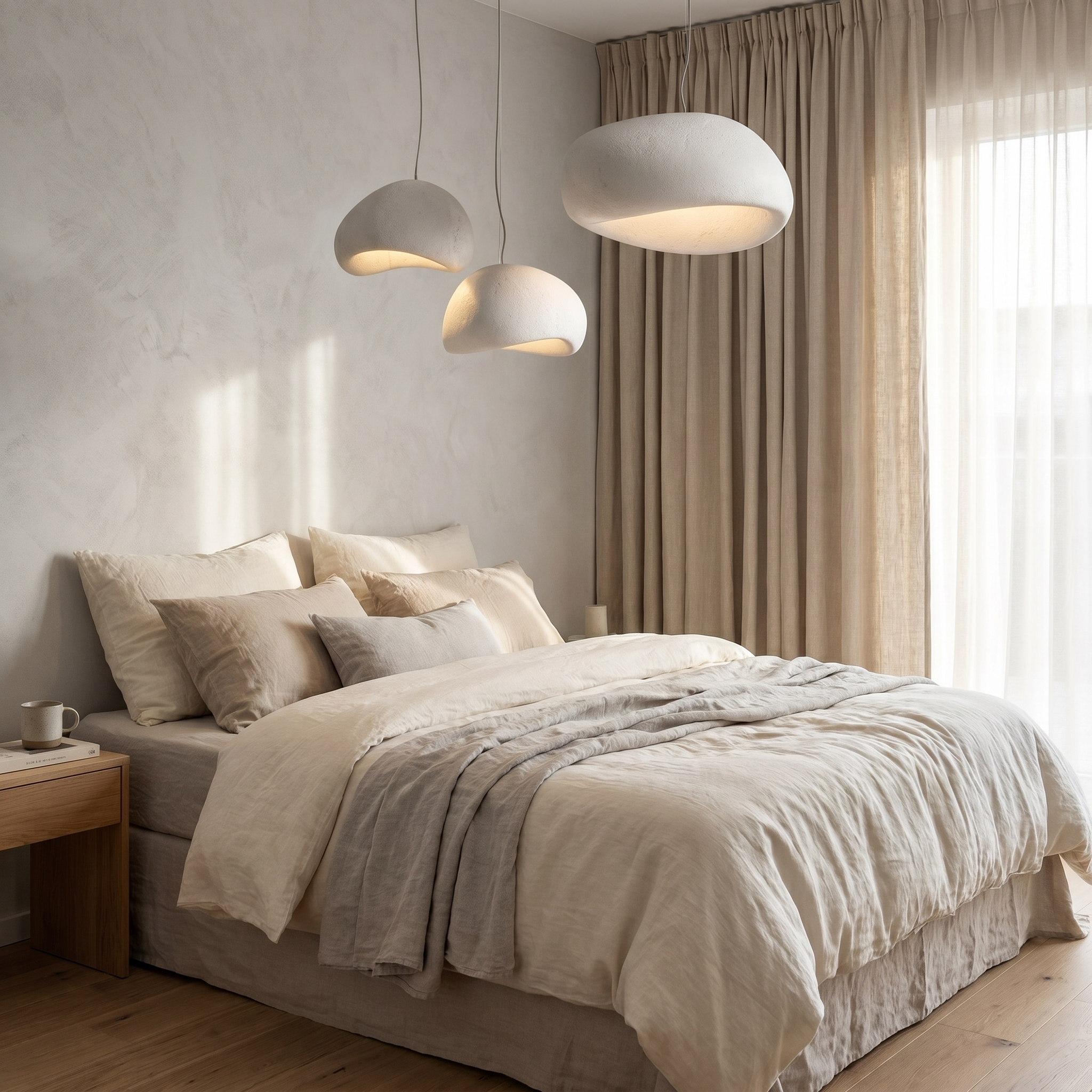
Non-geometric shapes — cloud forms, organic branch structures, abstract clusters. Best for: living rooms and entryways where drama is the goal. The Cloud Pendant Chandelier is the most distinctive example in this category: a soft amorphous form that changes the character of any ceiling it hangs from.
Crystal Chandeliers (Modern Interpretation)
Crystal pendants on clean metal frames without the traditional tier-on-tier construction. Best for: primary bedrooms, formal dining rooms, high-end hotel-style spaces. The Aurora Luxe Modern Crystal LED Chandelier exemplifies this — gold frame, precise crystal placement, clean side profile.
Minimalist Sphere and Bubble Designs
Glass globes or enclosed sphere forms. Best for: modern apartments, Scandinavian-inspired interiors, spaces where you want warmth without drama.
Room-by-Room Chandelier Guide
Dining Room
The dining room is the traditional home of the chandelier, and for good reason — it anchors the table and sets the tone for meals. Key decisions: pendant-style or traditional arms; warm 2700K–3000K light; dimmable (always); diameter 12 inches less than table width; bottom of fixture 30–34 inches above table surface.
Living Room
Living rooms need centrally-placed ambient light that doesn't fight with the rest of the room's lighting. In open-plan layouts, the chandelier marks the conversation zone. Sizing up is better than sizing down — a small fixture looks lost in a large living room. Position centered over the main seating arrangement, not the geometric center of the room.
Entryway and Foyer
Entryways justify the most dramatic fixtures — this is where guests form their first impression. Two-story entries can support grand cascading designs. Key concern: the fixture should be visible from outside when the front door is open — that's your "wow" moment. Minimum 7 ft clearance from floor for standard 8-ft entries; more for anything taller.
Bedroom
Bedroom chandeliers should be softer in form and positioned above the foot of the bed, not directly over the pillow (avoid direct glare when lying down). Crystal designs add romance; matte black or brushed gold feels contemporary. 2700K light temperature for warmth. Dimmable is essential.
Kitchen
Over kitchen islands, pendant-style chandeliers or linear designs work best. Height: 30–36 inches above the countertop. For islands over 48 inches, consider two pendants rather than one oversized fixture.
LED vs. Bulb-Based Modern Chandeliers
Most new chandeliers fall into two categories: integrated LED (no separate bulbs) and socket-based (requires bulbs). Both have tradeoffs.
Integrated LED: Longer lifespan (typically 30,000–50,000 hours), lower operating cost, no bulb replacement. Downside: if the LED module fails, the whole fixture may need replacement rather than a simple bulb swap. Most modern crystal chandeliers at Hausgem use integrated LED.
Socket-based: More flexibility — you can change bulb color temperature or output level. Works with smart bulbs. For these, use A19 LED bulbs at 2700K–3000K for warm, residential light.
All modern chandeliers should be on a dimmable circuit. LED dimmers (TRIAC-style, rated for LED loads) are different from old incandescent dimmers — verify compatibility before installing.
Installation Basics: What to Know Before You Buy
Chandeliers require a ceiling electrical box rated for their weight. Standard junction boxes hold 35 lbs; most chandeliers need a fan-rated box or a support brace, which holds 70–150 lbs depending on model.
Check the fixture weight in the product specs before ordering. For chandeliers over 30 lbs, budget for an electrician to install a proper support brace ($50–$150 in materials, 1–2 hours of labor). Never hang a chandelier from drywall alone.
Mounting plate (canopy) should sit flush against the ceiling. The chain or rod should be the right length — most chandeliers come with adjustable chains. Measure from ceiling to your target hanging height before installation and cut the chain accordingly.
Top Modern Chandeliers for 2026: Hausgem Picks
These are the designs that perform across style categories and customer reviews:
- Cloud Pendant Chandelier — $150. The bestseller. Sculptural form, works in living rooms, entryways, and even large bedrooms. Ships assembled.
- Cassiopeia Crystal Halo Chandelier — Gold ring with precise crystal drops. Formal but clean. Best for dining rooms and master bedrooms.
- Aurora Luxe Modern Crystal LED Chandelier — LED-integrated, gold finish, dining room optimized. Fully dimmable.
- Aether Infinity Gold LED Chandelier — Double-ring LED design. Contemporary, long lifespan, minimal maintenance.
- Astralis Crystal and Gold Chandelier — Crystal details on a streamlined frame. Works across both traditional and modern interiors.
FAQ: Modern Chandelier Lighting
How do I know if my ceiling can support a chandelier?
Most ceilings can support a chandelier if you use the right electrical box. Standard junction boxes hold up to 35 lbs. For heavier fixtures (most chandeliers are 15–50 lbs), install a fan-rated box or a structural support brace rated for 70+ lbs. When in doubt, hire an electrician to assess the ceiling joist situation before installing.
What wattage do I need for a chandelier to properly light a room?
A rough rule: 10–20 lumens per square foot for ambient lighting. A 200 sq ft dining room needs 2,000–4,000 lumens total. Many modern LED chandeliers are integrated and specify total lumen output in the product specs — look for that number rather than wattage, since LED wattage doesn't directly correlate with brightness.
Can I install a chandelier in a room with low ceilings?
Yes, but you need a semi-flush or flushmount chandelier design for ceilings under 8 ft. These mount directly to the ceiling without a hanging rod or chain, keeping the fixture bottom at 7.5–8 ft. For 8–9 ft ceilings, use a short rod mount (6–12 inches) rather than a full chain hang.
What's the difference between a chandelier and a pendant light?
Pendants are single-point light sources, usually one globe or shade per fixture. Chandeliers are multi-arm or multi-point, with several light sources on one fixture. In practice, some modern "chandeliers" are linear multi-pendant arrays, and some oversized single pendants are sold as chandeliers — the distinction is mostly marketing. For sizing purposes, treat any large ceiling fixture the same way.
Do modern crystal chandeliers need special cleaning?
Integrated LED crystal chandeliers need less maintenance than traditional ones since there are no bulbs to replace. Dust the crystals every 3–6 months with a soft, dry cloth or a can of compressed air. For a deeper clean, use a crystal cleaner spray (available at hardware stores) — spray onto a cloth rather than directly onto the fixture. Never spray water or cleaning solution onto the fixture housing itself.
How much does it cost to install a chandelier?
DIY installation takes 1–3 hours if you have basic electrical knowledge and the right tools (wire strippers, voltage tester, drill). Electrician installation typically runs $100–$250 for a standard swap on an existing junction box, or $250–$500 if a new box or structural support is needed. Factor this into your total budget when comparing options.

