


Crystal chandeliers refract light into prismatic rainbow patterns and deliver the traditional glamour look. Glass chandeliers diffuse light into a softer, more even glow and suit contemporary, minimalist, and transitional interiors. The right choice depends on your room's aesthetic, ceiling height, and how much light refraction versus light diffusion you want.
What Is the Actual Difference Between Crystal and Glass Chandeliers?
The core difference is how each material interacts with light.
Crystal has a high refractive index — typically 1.5–1.7 for K9 optical crystal, compared to roughly 1.4–1.5 for standard glass. This higher refractive index means crystal bends and separates light into its constituent wavelengths more dramatically, producing rainbow-spectrum prismatic effects on walls and ceilings when illuminated. The sparkle effect requires direct light hitting the crystal facets at specific angles — the more facets, the more dispersion.
Glass has a lower refractive index and is typically formed into smooth curves, bubbles, or droplet shapes rather than faceted pieces. It scatters and diffuses light rather than refracting it into spectrum patterns. The result is a softer, more ambient glow: warmer, less dramatic, and more consistent across the room.
Neither is objectively better. They are optimised for different design outcomes.
Crystal vs Glass Chandelier: The Key Differences
| Feature | Crystal Chandelier | Glass Chandelier |
|---|---|---|
| Light effect | Prismatic rainbows, sparkle, high drama | Soft diffused glow, even ambient light |
| Refractive index | 1.5–1.7 (K9 crystal) | 1.4–1.5 (standard glass) |
| Aesthetic | Formal, traditional, glam, maximalist | Contemporary, minimalist, transitional |
| Weight | Heavier (dense crystal pieces) | Lighter (blown glass, hollow forms) |
| Price range | $300–$5,000+ | $150–$3,000 |
| Maintenance | Higher — dust shows on facets | Lower — smooth surfaces easier to wipe |
| Best rooms | Dining rooms, foyers, ballrooms, formal living | Living rooms, bedrooms, kitchens, modern lofts |
| Ceiling height | Works best at 10 feet+ for full effect | Scales down to 8-foot ceilings |
| Fragility | Higher — individual crystal pendants can chip | Lower — glass blown into solid forms is durable |
| Interior styles | Traditional, Hollywood Regency, glam, Versailles | Japandi, contemporary, Scandinavian, industrial |
Which Rooms Suit Crystal vs Glass Chandeliers?
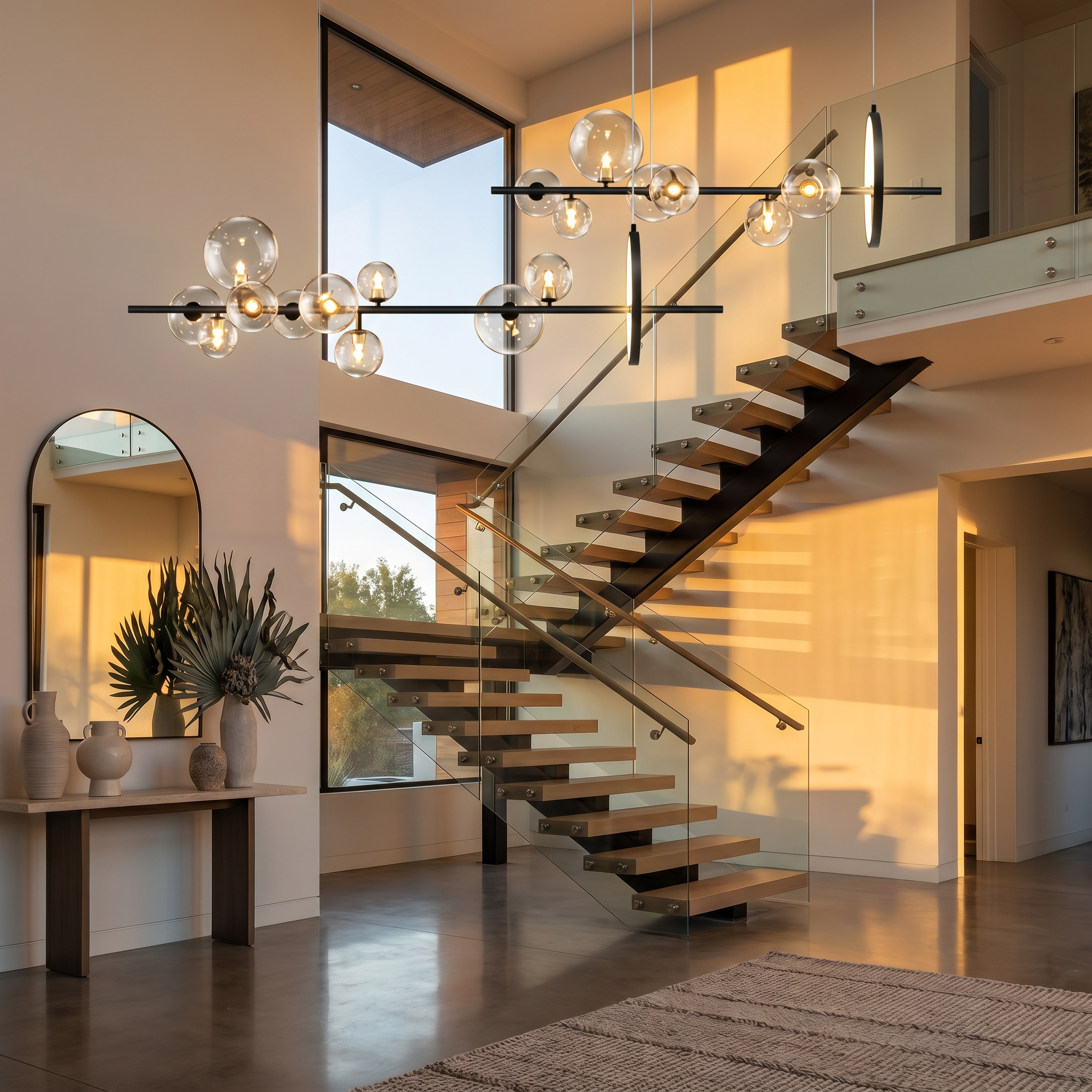
Dining rooms: Crystal chandeliers are the traditional choice for formal dining rooms. The prismatic light effect over a dining table creates an immediately elevated atmosphere — the kind of room that feels dressed up for dinner. For contemporary or open-plan dining, a glass chandelier (bubble cluster or droplet form) delivers elegance without formality.
Living rooms: Glass chandeliers work better in most modern living rooms. The softer diffused glow layers well with floor lamps, wall sconces, and table lamps — the layered-lighting approach that contemporary interiors favour. Crystal, if used in a living room, works best as a single statement piece in a room designed around it.
Entryway / foyer: Both work well, with caveats. Crystal chandeliers in a double-height foyer create maximum impact — the light has room to refract and project across walls. In a narrow single-height entryway, a large crystal chandelier can feel overwhelming. A sleek glass pendant or geometric glass fixture reads as more considered.
Bedroom: Glass chandeliers are almost always the better bedroom choice. The soft, diffused glow of a glass pendant or bubble cluster creates the calm, ambient light bedrooms need. Crystal's prismatic sparkle effect can be disorienting in a space designed for rest.
Kitchen: Glass works better in kitchens. The reflective surfaces of a kitchen (backsplash, countertop, appliances) already create visual complexity — adding prismatic crystal refraction amplifies that to an uncomfortable degree. A glass bubble chandelier or glass globe pendant reads as elegant without competing with the kitchen's existing surfaces.
What Types of Crystal Are Used in Chandeliers?
Not all crystal chandeliers use the same material. The designation "crystal" covers a range of compositions with different optical quality and price points:
K9 optical crystal — the standard for mid-to-high-range chandeliers. K9 is a borosilicate-based optical glass with a refractive index of approximately 1.52 — similar to lead crystal but without lead content. Clear, bright, and consistent in refraction. Most Hausgem crystal chandeliers use K9 crystal components.
Swarovski crystal — the premium standard. Cut to precise tolerances with a proprietary coating (Advanced Crystal) that enhances clarity and brilliance. Swarovski specifications are only found in chandeliers explicitly branded as Swarovski-strand models — expect $1,500+ for anything meaningful.
Acrylic / plastic "crystal" — the most affordable option, often listed as "crystal-style" or "faux crystal." Refracts light but produces less sparkle and clarity than glass-based crystal. Appropriate for children's rooms, low-traffic spaces, or high-humidity environments where real crystal would be impractical.
Murano glass crystal — Italian handblown glass with a long history of chandelier production. Technically glass, not crystal, but prized for colour, form, and craft. Each piece is slightly different — appropriate for statement/bespoke interiors, not mass production.
What Types of Glass Are Used in Chandeliers?
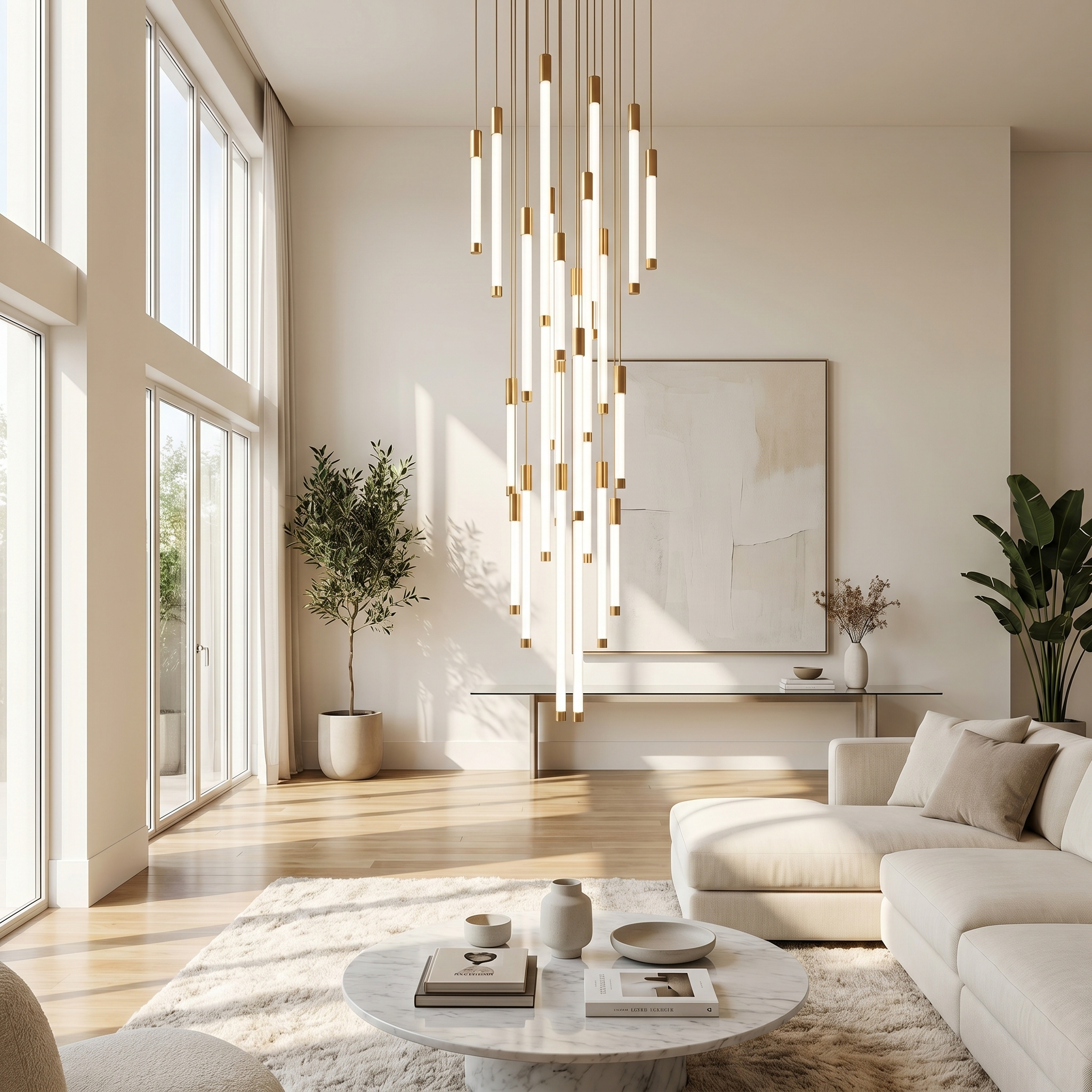
Borosilicate glass — high-temperature resistant, very clear, used in laboratory and premium home fixtures. Expensive but exceptionally durable and consistent.
Soda-lime glass — the standard for most glass chandeliers. Clear, lightweight, cost-effective. The Zia Modern Glass Bubble Chandelier uses this type of glass for its characteristic bubble-sphere construction.
Smoked / tinted glass — grey, amber, or bronze-tinted glass. The Elysian Smokey Crystal Wall Sconce uses smoked glass to create a moodier, more dramatic light quality — particularly effective in dark-walled rooms.
Frosted / opaline glass — sandblasted or acid-etched to create a matte diffusing surface. Eliminates visible bulb glow entirely. Warm, soft output ideal for bedrooms and living rooms.
Droplet glass — glass formed into irregular teardrop or raindrop shapes. The Felix Glass Droplet Chandelier ($1,143) and the Zia Glass Bubble Chandelier ($251) represent the two price points of this style — the Felix with cascading glass strands for formal drama, the Zia with grouped bubble spheres for contemporary warmth.
Hausgem Crystal Chandeliers vs Glass Chandeliers
Hausgem crystal chandelier picks:
The Opal Luxe Modern Luxury Crystal LED Chandelier ($1,078) — clear glass crystal pendants in a contemporary round form. Bridges traditional crystal sparkle with modern geometry — appropriate for dining rooms and living rooms that want glamour without full traditional formality.
The Nordic Halo Circular LED Chandelier ($420) — circular LED ring with crystal bead accents. The crystal beads add refracted light points around the perimeter without overwhelming the clean Scandinavian silhouette. Strong value for a crystal-accented modern fixture.
The Elysian Halo Luxury LED Round Crystal Chandelier ($2,365) — the flagship crystal statement piece. Full crystal envelope around a round LED frame — maximum sparkle, appropriate for high-ceiling dining rooms and formal entryways.
Hausgem glass chandelier picks:
The Zia Modern Glass Bubble Chandelier ($251) — the entry-level glass option. Grouped glass bubble spheres in a compact form that works in bedrooms, dining nooks, and living rooms without a high ceiling. The best-value glass chandelier in the catalog.
The Felix Glass Droplet Chandelier ($1,143) — cascading glass droplets on individual strands. The contemporary answer to a traditional crystal strand chandelier — similar vertical drama, modern glass aesthetic rather than faceted crystal sparkle.
The Nordic Wave Luxury LED Chandelier ($1,435) — curved glass forms with gold accents. For contemporary-glam spaces that want visual complexity without traditional crystal.
Browse all Hausgem chandeliers →
Which Should You Choose?
Choose crystal if: your room is formal (dining room, entryway, traditional living room), you have ceiling height for the light to refract and project (10+ feet ideal), and you want the dramatic sparkle effect as the centrepiece of your room design.
Choose glass if: your room is contemporary, minimalist, transitional, or japandi-influenced; your ceiling is 8–9 feet; or you want ambient, diffused light that layers with other sources rather than competing for attention.
Choose crystal-accented glass if: you want some sparkle without full crystal drama. Several modern chandeliers combine glass forms with crystal bead accents — the Nordic Halo ($420) is a good example — giving you the best of both material qualities at an accessible price point.
Frequently Asked Questions: Crystal vs Glass Chandeliers
What is the difference between a crystal chandelier and a glass chandelier?
Crystal chandeliers use high-refractive-index materials (K9 optical crystal, lead crystal, or Swarovski) that bend light into prismatic rainbow effects. Glass chandeliers use lower-refractive-index materials formed into smooth shapes (bubbles, droplets, globes) that diffuse light into a softer, more even glow. Crystal = drama and sparkle. Glass = ambient warmth.
Is K9 crystal the same as real crystal?
K9 is optical borosilicate glass with a refractive index close to traditional lead crystal (approximately 1.52). It is technically glass, not crystal in the mineralogical sense, but it performs like crystal optically — clear, bright, and refractive. Most modern "crystal" chandeliers use K9 rather than lead crystal (lead crystal has been largely phased out due to health and environmental concerns).
Are glass chandeliers cheaper than crystal chandeliers?
Generally yes, but not always. Basic glass globe chandeliers start under $200; entry-level crystal chandeliers start around $250–$350. At the high end, both can reach $2,000–$5,000+. The price is driven more by fixture size, brand, and complexity than strictly by material. The Zia Glass Bubble Chandelier ($251) is more affordable than the Elysian Halo Crystal Chandelier ($2,365), but both are glass-based in their construction.
Which is easier to clean — crystal or glass chandeliers?
Glass is easier to clean. Smooth glass forms (bubbles, globes, droplets) can be wiped with a damp cloth. Crystal chandeliers have many individual faceted pendants that collect dust in their grooves — they require either removing individual pieces for washing or using a spray-on chandelier cleaner that drips dust away. For high-maintenance resistance, choose glass.
Can a crystal chandelier work in a modern home?
Yes, with intentional styling. A crystal chandelier in a modern home works when it's the deliberate contrast element — a traditional crystal piece against a contemporary background (white walls, minimal furniture, clean lines). The contrast reads as editorial rather than mismatched. Avoid crystal in japandi or Scandinavian interiors where the material conflicts with the aesthetic's quiet principles.
How do I know if a chandelier uses real crystal or acrylic?
Real K9 crystal is heavier than acrylic, clearer, and has sharper facet edges. Acrylic feels lighter, has a slight plastic surface texture, and produces less distinct rainbow refraction. In product listings, look for "K9 crystal", "optical crystal", or "lead-free crystal" — these indicate glass-based crystal. "Crystal-style", "crystal-inspired", or "faux crystal" indicate acrylic.
Which chandelier material is better for a dining room?
For a formal dining room, crystal is the traditional choice — the prismatic light effect over a table creates an immediately elevated atmosphere. For a contemporary or open-plan dining space, a glass chandelier (bubble cluster, droplet, or globe form) delivers elegance without the formality. Over a dining table, position the fixture 30–36 inches above the surface regardless of material.
*By Hausgem Editorial Team • Updated June 2026*
*All product specifications sourced from Hausgem product listings. Verify current dimensions and specifications on individual product pages.*

