


A cloud chandelier is a sculptural pendant light designed to mimic the soft, organic form of a cloud — rounded, diffused, and atmospheric. Unlike traditional crystal chandeliers, cloud chandeliers prioritise form as much as light: the fixture itself is the focal point, creating a dreamy, floating effect that works as well in a minimalist bedroom as it does in a dramatic living room.
What Is a Cloud Chandelier?
A cloud chandelier is a ceiling light fixture with a rounded, bubbled, or amorphous silhouette that evokes the organic shape of a cloud. The category spans a wide range of styles — from frosted globe clusters to sculptural foam and acrylic forms — but they share a design language: soft edges, diffused light output, and an impression of weightlessness.
The term "cloud chandelier" has become a catch-all for any pendant or ceiling light with a cloud-like form. In practice, the category includes:
- Frosted globe pendants — grouped or single spheres in milky glass or polymer
- Bubble cloud chandeliers — clusters of translucent or opalescent spheres
- Sculptural foam/acrylic cloud lights — statement pieces that look hand-formed, with irregular edges
- Japanese-inspired cloud pendants — rounded, wabi-sabi aesthetic, often in warm polymer materials
What unites them is soft, ambient light output. Cloud chandeliers are not task lights — they are atmosphere creators, best deployed in spaces where mood matters more than lux levels.
Why Are Cloud Chandeliers Trending in 2026?
Cloud chandeliers have emerged as one of the defining lighting trends of 2025–2026 for three reasons: the move toward sculptural statement lighting, the popularity of quiet-luxury and japandi aesthetics, and social media's appetite for dreamlike interiors.
Sculptural lighting is replacing decorative lighting. In 2026, the fixture is the art. A cloud chandelier removes the need for a separate ceiling medallion, pendant shade, or art piece — it anchors the room. Interior designers across styles, from Scandinavian minimalism to maximalist eclecticism, are specifying sculptural cloud forms as primary focal points.
Japandi and wabi-sabi interiors demand soft-form lighting. The dominant interior trend of 2025–2026 favours organic shapes, natural materials, and visual calm. Angular or geometric fixtures clash with this aesthetic; cloud forms align perfectly — they read as natural, soft, and considered without effort.
Diffused light is better for living spaces. Unlike bare bulb or direct-beam pendants, cloud chandeliers wrap the LED source in frosted material, casting a warm, diffused glow that eliminates harsh shadows. For living rooms, bedrooms, and dining spaces where mood matters, this is the ideal light quality.
Cloud Chandelier Style Variants: Which Is Right for Your Space?
| Style | Best For | Light Quality | Price Range |
|---|---|---|---|
| **Frosted globe / sphere cluster** | Minimalist, japandi, Scandi | Soft, even diffusion | $100–$400 |
| **Bubble cluster** | Eclectic, maximalist, playful | Warm, layered glow | $200–$800 |
| **Sculptural foam/acrylic** | Statement spaces, contemporary | Dramatic ambient | $300–$1,200 |
| **Single globe pendant** | Bedrooms, reading nooks | Focused diffused light | $80–$250 |
| **Multi-arm cloud form** | Dining rooms, foyers | Architectural statement | $400–$2,000 |
For most living rooms and bedrooms, a frosted globe or single sculptural pendant hits the best balance of visual impact and versatility. The more complex bubble cluster and multi-arm styles suit spaces where the chandelier is the deliberate, undistracted focal point.
How to Size a Cloud Chandelier for Any Room
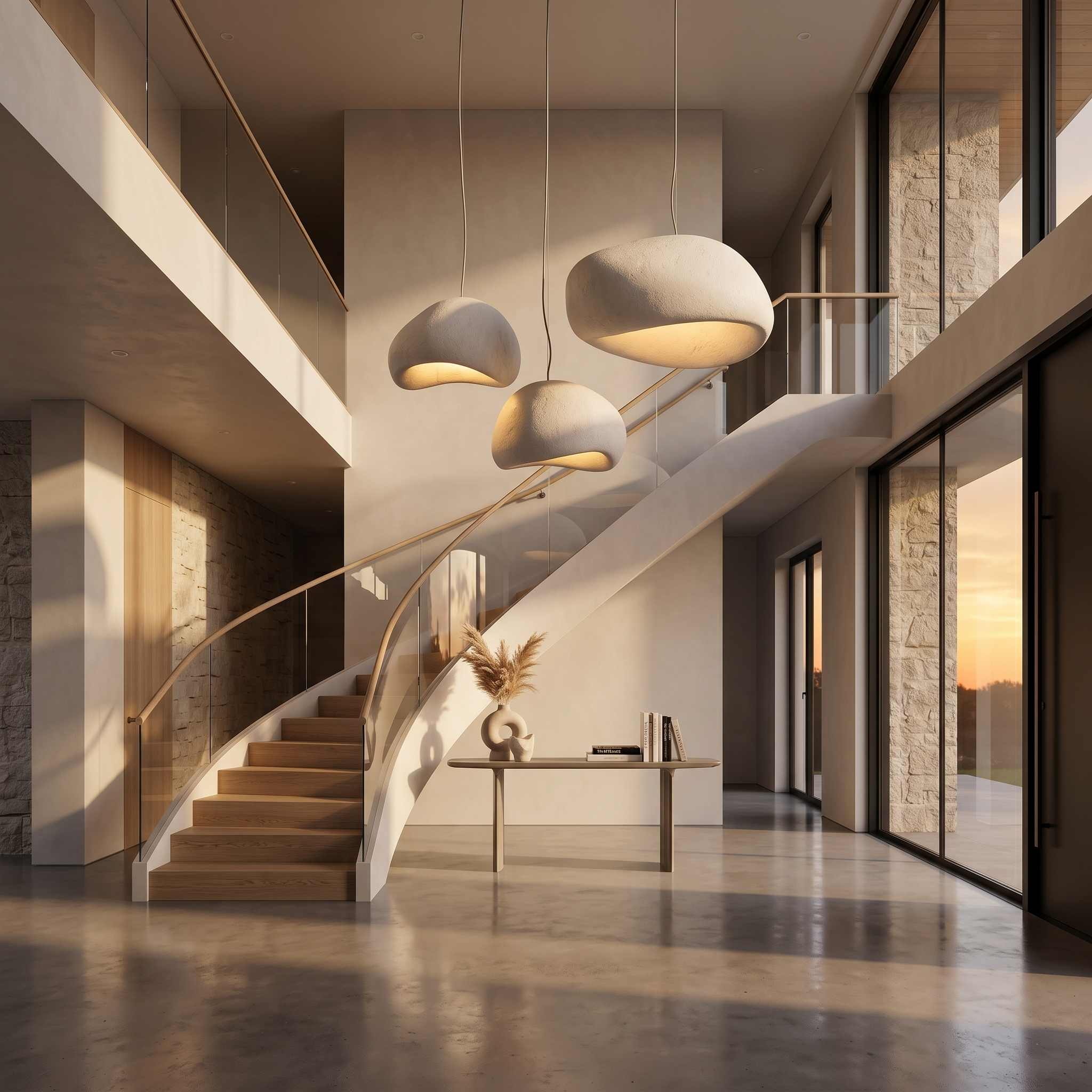
Sizing a cloud chandelier follows the same principle as any pendant or chandelier fixture: the diameter should reflect the room's footprint, and the hang height should keep the fixture visible without blocking sightlines.
Diameter rule:
Add the room's length and width in feet. The result in inches is the ideal fixture diameter.
| Room Size | Recommended Diameter | Example |
|---|---|---|
| Small (8 × 10 ft) | ~18 inches | Bedroom, reading nook |
| Medium (12 × 14 ft) | ~26 inches | Living room, dining room |
| Large (16 × 18 ft) | ~34 inches | Open-plan living, foyer |
| Statement feature wall | 40+ inches | Double-height entry, great room |
Hang height rule:
For rooms with standard 8-foot ceilings, the bottom of the fixture should hang at 7 feet from the floor minimum. Add 3 inches per additional foot of ceiling height. Over a dining table, position 30–36 inches above the table surface. For a bedroom, ensure clearance of at least 7 feet above the floor when seated on the bed.
Key caveat: Cloud chandeliers with a strong sculptural form tend to read larger than their measured diameter suggests. If you're between sizes, go smaller — the organic shape draws the eye and fills visual space efficiently.
What Materials Are Cloud Chandeliers Made From?
Material determines both the aesthetic and the light quality of a cloud chandelier.
High-polymer / resin composite — The most common material for contemporary cloud pendants. Durable, lightweight, and excellent at diffusing warm LED light. The Hausgem Cloud Pendant uses high-polymer construction, which delivers the frosted-globe effect without the fragility of glass. Best for: everyday residential use, renters, ceiling heights under 12 feet.
Frosted glass — Premium option. Heavier, more expensive, and richer in texture. Frosted glass scatters light with a slight sparkle that polymer cannot replicate. Best for: dining rooms, formal living rooms, spaces that will benefit from a tangible material quality up close.
Acrylic — Lightest weight, most affordable. Less depth of material than glass or polymer. Good for: temporary installs, rental spaces, children's rooms.
Fabric / textile — Cloud-inspired pendant shades in cotton or linen. Very soft diffusion, warm colour rendering. Best for: bedrooms, nurseries, acoustic-sensitive spaces.
For a living room or bedroom statement piece where durability and light quality both matter, high-polymer construction — as used in the Hausgem Cloud Pendant — is the practical choice at the $100–$200 price point.
Where to Place a Cloud Chandelier in Your Home
Living room: Centre the cloud chandelier over the seating area rather than dead-centre of the ceiling. Most living rooms have furniture pushed away from one wall; the optical centre of the occupied space is where the fixture should read. Mount at 7–8 feet from the floor for standard ceiling heights. A single sphere or moderate cluster (26–30 inch diameter) anchors a 12 × 14 foot room cleanly.
Bedroom: A cloud pendant over the bed replaces the need for a central overhead fixture and creates an intimate, enveloping effect. Position directly over the mattress centre. For lower ceilings (8–9 feet), use a short cord or semi-flush mount cloud form to maintain clearance. The soft diffused output is ideal for winding down — no harsh beam angles or direct light sources.
Dining room: Cloud chandeliers work over dining tables when the scale is right — the fixture should span 50–75% of the table width. A 30-inch cloud form over a 48-inch dining table is well-proportioned. Hang 30–34 inches above the table surface.
Foyer or entryway: A sculptural cloud chandelier in an entryway creates an immediate impression. Double-height foyers suit the larger bubble cluster styles. In a standard-height entryway, choose a compact cloud pendant (18–22 inches) to avoid visual crowding.
Nursery or child's bedroom: Soft-form cloud chandeliers are a natural fit for children's spaces. Opt for fabric or frosted polymer over glass for safety. The gentle diffused light creates ideal conditions for sleep and quiet play.
The Hausgem Cloud Pendant Chandelier
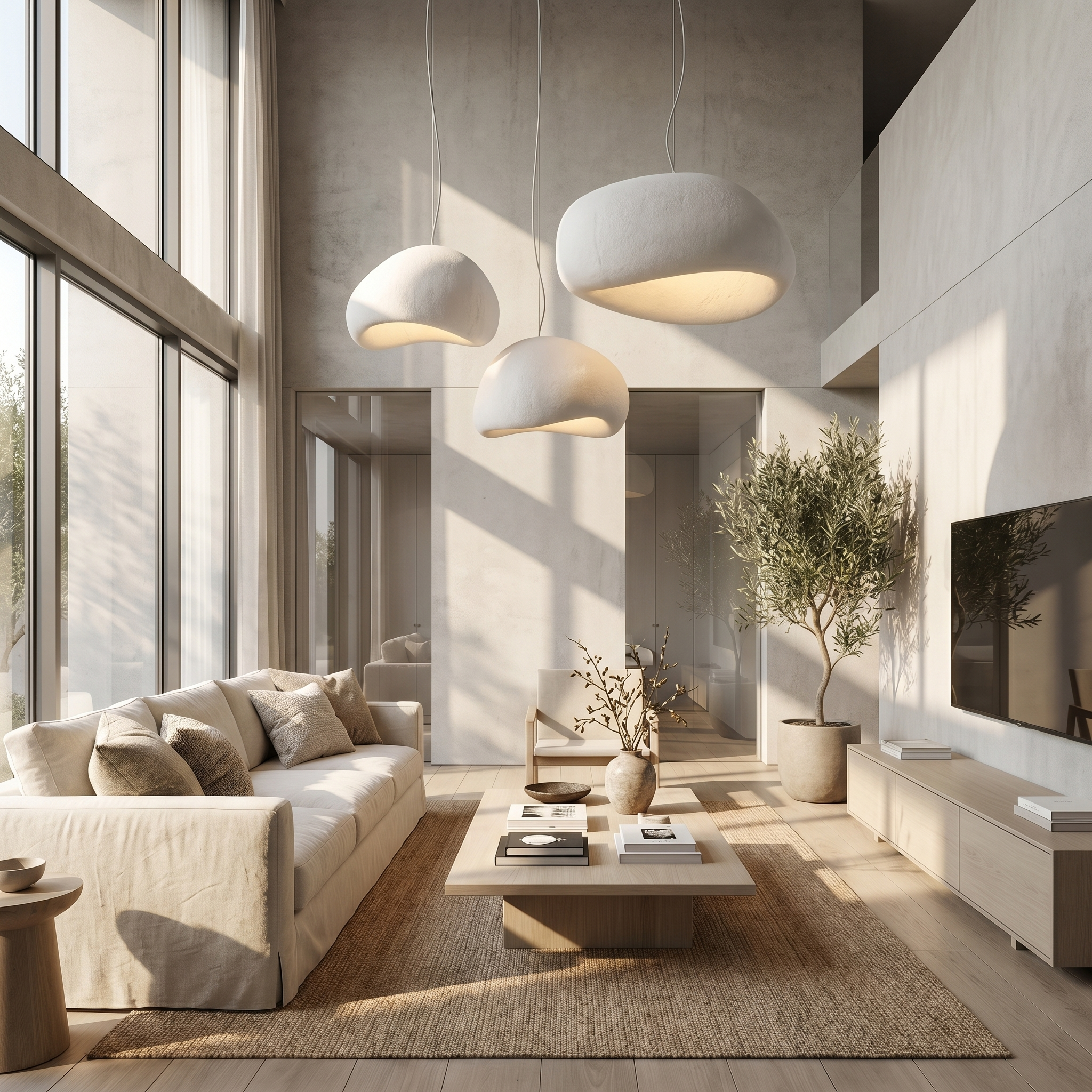
The Cloud Pendant is Hausgem's best-selling fixture — and the product that put cloud chandeliers on the Hausgem map.
Specifications:
- Design: Spherical pendant, Japanese-aesthetic inspired, organic cloud form
- Material: High-polymer body + iron hardware
- Light source: E27 LED bulbs (included)
- Coverage: 10–15 square metres (107–161 sq ft)
- Installation: Cord pendant, adjustable drop
- Voltage: 90–260V (worldwide compatible)
- Certifications: CCC, CE, CQC, GS, LVD, RoHS
- Warranty: 3 years
- Price: $150
What makes it a best-seller is the balance of sculptural impact and accessible price point. At $150, the Cloud Pendant delivers the visual effect of a designer cloud fixture — diffused warm glow, rounded organic form, statement-making silhouette — without the $400–$1,200 price tag of comparable glass sculptural pendants.
Browse the full Hausgem Cloud Chandelier collection →
Or view the Cloud Pendant Chandelier product page →
Cloud Chandelier vs Standard Pendant vs Crystal Chandelier: Which Do You Need?
Choose a cloud chandelier if: you want a sculptural, atmosphere-first fixture that doubles as a room focal point. You prioritise the dreamy, diffused light quality and organic form over precise task lighting or traditional elegance.
Choose a standard pendant if: you need a clean, versatile fixture that focuses light on a specific surface — a kitchen island, reading chair, or work desk. Standard pendants are more directional and less sculptural.
Choose a crystal chandelier if: you want formal elegance, sparkle from multiple refracted light points, and a traditional or glam aesthetic. Crystal chandeliers are statement pieces for dining rooms, entryways, and formal living spaces where the light's sparkle is part of the design intent.
For contemporary, minimalist, japandi, or quiet-luxury interiors, a cloud chandelier is almost always the better fit. The soft-form fixture feels organic and current in a way that traditional crystal does not.
Frequently Asked Questions: Cloud Chandeliers
What exactly is a cloud chandelier?
A cloud chandelier is a ceiling pendant light with a soft, organic, cloud-like silhouette — typically a rounded sphere, bubble cluster, or sculptural amorphous form. The design prioritises diffused, ambient light and visual impact over task lighting. Most cloud chandeliers use frosted polymer, glass, or acrylic materials that scatter LED light evenly in all directions.
Are cloud chandeliers still on trend in 2026?
Yes. Cloud chandeliers are a defining fixture of the 2025–2026 japandi, quiet-luxury, and sculptural lighting movements. Their organic form pairs naturally with the dominant interior palettes of 2026 — warm neutrals, natural textures, and soft curves. Unlike trend-driven shapes, the cloud form is grounded in natural inspiration, giving it longevity beyond a single season.
What size cloud chandelier do I need for my living room?
Add your room's length and width in feet — the result in inches is the recommended fixture diameter. For a 12 × 14 foot living room, a 26-inch diameter cloud chandelier is well-proportioned. For larger open-plan spaces, scale up to 34 inches or choose a bubble cluster configuration. When in doubt, err smaller — the organic shape fills visual space more than its measured diameter suggests.
How high should a cloud chandelier hang?
In a living room or bedroom, the bottom of the fixture should sit at least 7 feet from the floor. Over a dining table, hang 30–36 inches above the table surface. For rooms with 9-foot ceilings, add 3 inches of drop per additional foot of ceiling height above 8 feet.
Can I use a cloud chandelier in a low-ceiling room?
Yes, with the right fixture. For ceilings at 8 feet or below, choose a compact semi-flush or close-to-ceiling cloud form rather than a pendant with a long cord. Small sphere cloud forms (14–18 inches) work well in low-ceiling bedrooms and hallways without overwhelming the space or reducing clearance.
What bulb does a cloud chandelier use?
Most cloud chandeliers use E26 or E27 base LED bulbs (the standard screw-in base). LED bulbs rated at 2700K–3000K (warm white) match the soft, ambient aesthetic of the cloud form best. Avoid cool white (5000K+) bulbs — the blue-white output conflicts with the warm, dreamy atmosphere cloud chandeliers are designed to create.
Is the Hausgem Cloud Pendant good quality?
The Hausgem Cloud Pendant uses high-polymer construction (not plastic) for durability and light diffusion, with iron hardware and worldwide-compatible voltage (90–260V). At $150 with a 3-year warranty and CE/RoHS certification, it represents strong value for a sculptural pendant of this form. It is Hausgem's best-selling fixture — the consistent demand reflects buyer satisfaction rather than brand marketing alone.
*By Hausgem Editorial Team • Updated June 2026*
*All product specifications sourced from Hausgem product listings. Verify current dimensions and specifications on individual product pages.*

