

Wall Sconce Placement Guide: Height & Spacing Rules
The single most common mistake with bedroom wall sconces is hanging them too high. The correct height for a bedside wall sconce is 60–66 inches from the floor — or 30–36 inches above the top of the mattress — so the light falls naturally at reading level without glare when you're sitting up in bed. This guide covers every placement decision: height, horizontal offset, switch placement, style, and finish.
How High Should Bedroom Wall Sconces Be?
“Even when I'm looking at a piece of furniture like a table, I always think about how I can turn to a light fixture.”
— Kelly Wearstler, interior designer, ELLE Decor (February 2022)
The rule: 60–66 inches from the floor for standard placement. 30–36 inches above the mattress surface for bedside reading sconces.
The two measurements are linked: a standard bed sits 25–30 inches tall (mattress top from floor). Adding 30–36 inches for optimal reading height lands you at exactly 55–66 inches from the floor, depending on bed height. Use the mattress-surface measurement rather than the floor measurement when precise reading-light positioning matters.
| Bed Height | Mattress Top from Floor | Ideal Sconce Bottom | Sconce Centre |
|---|---|---|---|
| Low platform bed | 18–22 inches | 48–58 inches | 52–62 inches |
| Standard bed | 24–28 inches | 54–64 inches | 58–68 inches |
| High bed / pillow-top | 30–36 inches | 60–72 inches | 65–76 inches |
Why this height matters: a sconce mounted too high (above 72 inches) throws light onto the bed at a steep downward angle, creating glare when seated. A sconce at 60–66 inches casts light at eye level when reading — exactly where it needs to be.
How Far from the Headboard Should a Wall Sconce Be?
Mount bedside sconces 8–12 inches to the side of the headboard edge — not directly above the pillow.
Directly above the pillow is the most common placement error. It creates a harsh pool of light in one spot and leaves the nightstand and reading surface in shadow. Offsetting the sconce 8–12 inches outward spreads light across a wider zone and allows comfortable reading at any angle.
For a queen bed (60 inches wide): place sconces approximately 38–42 inches from the bed's centre line on each side — this puts them at the outer edge of the pillow zone.
For a king bed (76 inches wide): place sconces approximately 46–50 inches from centre — slightly further out to match the wider headboard.
If the bedroom wall doesn't allow 8 inches of clearance from the headboard (narrow room, window placement), use a swing-arm sconce style that extends from the wall and can be angled over the reading zone without being permanently fixed to one spot.
How Many Sconces Does a Bedroom Need?
For a shared bedroom with a central bed, two sconces symmetrically placed is the standard — one each side of the headboard. This gives each occupant independent control of their reading light (use individual switched circuits or sconces with built-in dimmers).
For a single-occupant bedroom or studio, one sconce on the dominant reading side is practical. Place it on the wall the occupant faces when reading (usually away from the window).
For a bedroom with no headboard or floating bed placement, two sconces with swing-arm or adjustable heads give the most flexibility to redirect light to where it's needed.
What Style of Wall Sconce Works Best in a Bedroom?
“I see statement lighting having a real moment in 2025.”
— Kathy Kuo, interior designer, via Homes & Gardens (2025)

Bedroom sconces work hardest when they combine directional output (for reading) with a warm, diffused glow (for ambient). The best bedroom sconce styles by room aesthetic:
Minimalist / Japandi / Scandinavian:
A compact, clean-form sconce in matte white, brushed nickel, or warm brass. The Aurora Borealis Modern Dual-Disc LED Wall Sconce (Chrome, $149.99) fits this aesthetic — its dual-disc form is architectural without being decorative. Avoid ornate or crystal-heavy designs that interrupt the quiet visual palette.
Contemporary / Transitional:
A slim wall sconce with a shaded head or frosted glass diffuser. Warm metallics (gold, brass, bronze) suit contemporary bedrooms well. The Vespera Crystal Geometric Wall Sconce (Gold, $159) adds a touch of geometric drama without overwhelming a bedroom.
Luxury / Glamour:
Crystal accents and gold finishes make an immediate statement in a luxury bedroom. The Imperial Illumination Luxury Gold & Crystal Wall Sconce ($191) or the Celestria Golden Glass Wall Sconce ($354) create the layered, aspirational bedroom aesthetic. Pair with a dimmer circuit — full brightness is for getting ready; 20–40% brightness is for winding down.
Botanical / organic:
The Verde LED Wall Lamp ($199.95) and Aqua Plant Wall Lamp ($239) work as bedroom sconces in spaces where living-art design matters. The integrated plant vase adds a calming, organic element to the bedside wall — especially effective in bedrooms with earthy or biophilic palettes.
Does a Bedroom Wall Sconce Need to Be Hardwired?
Not necessarily. The two options are:
Hardwired sconces — permanent installation requiring an electrician. The cleanest look: no visible cord, integrated switch plate. Best for new builds, renovations, or bedrooms where you're committing to the placement long-term.
Plug-in sconces — mount to the wall with a standard bracket; cord runs down the wall to a nearby outlet (or behind a cord cover). No electrician required. Swap positions easily. Many plug-in sconces include an inline switch. Best for renters, temporary setups, or anyone who wants to test placement before committing to wiring.
Rechargeable battery sconces — mount anywhere, no cord, recharge via USB. Runtime is typically 6–12 hours per charge at medium brightness. Ideal for walls without nearby outlets or for renters who need to leave no trace.
For most bedroom users choosing between plug-in and hardwired: if the sconce will stay in place for 2+ years, hardwire. If you might reposition it (new furniture, moving house), plug-in is the better call.
What Lumen Output Does a Bedroom Sconce Need?
“LED lighting has come so far, and we worked hard to make sure the light these fixtures emits feels warm and beautiful.”
— Kelly Wearstler, interior designer, ELLE Decor (February 2022)
300–500 lumens per sconce is the target range for bedroom ambient + reading light.
| Use Case | Lumens Needed | Equivalent LED Bulb |
|---|---|---|
| Ambient only (mood light, nightlight) | 150–250 lm | ~3–4W LED |
| Reading / bedside task | 300–500 lm | ~5–8W LED |
| Getting-ready / dressing area | 600–800 lm | ~9–12W LED |
| Primary bedroom light (no ceiling fixture) | 800–1,200 lm per sconce | ~12–15W LED |
Colour temperature: Always use warm white (2700K–3000K) for bedroom sconces. Cool white (4000K+) suppresses melatonin and interferes with sleep. The warm amber tone of 2700K is indistinguishable from incandescent light and creates the psychological "wind-down" signal the bedroom needs.
Dimmability: If possible, choose sconces with dimmable drivers or pair with a compatible dimmer switch. Being able to reduce from 500 lumens to 50 lumens in the same fixture gives you one light source that works for reading, relaxing, and sleeping.
Can You Put a Wall Sconce Behind a Bed?
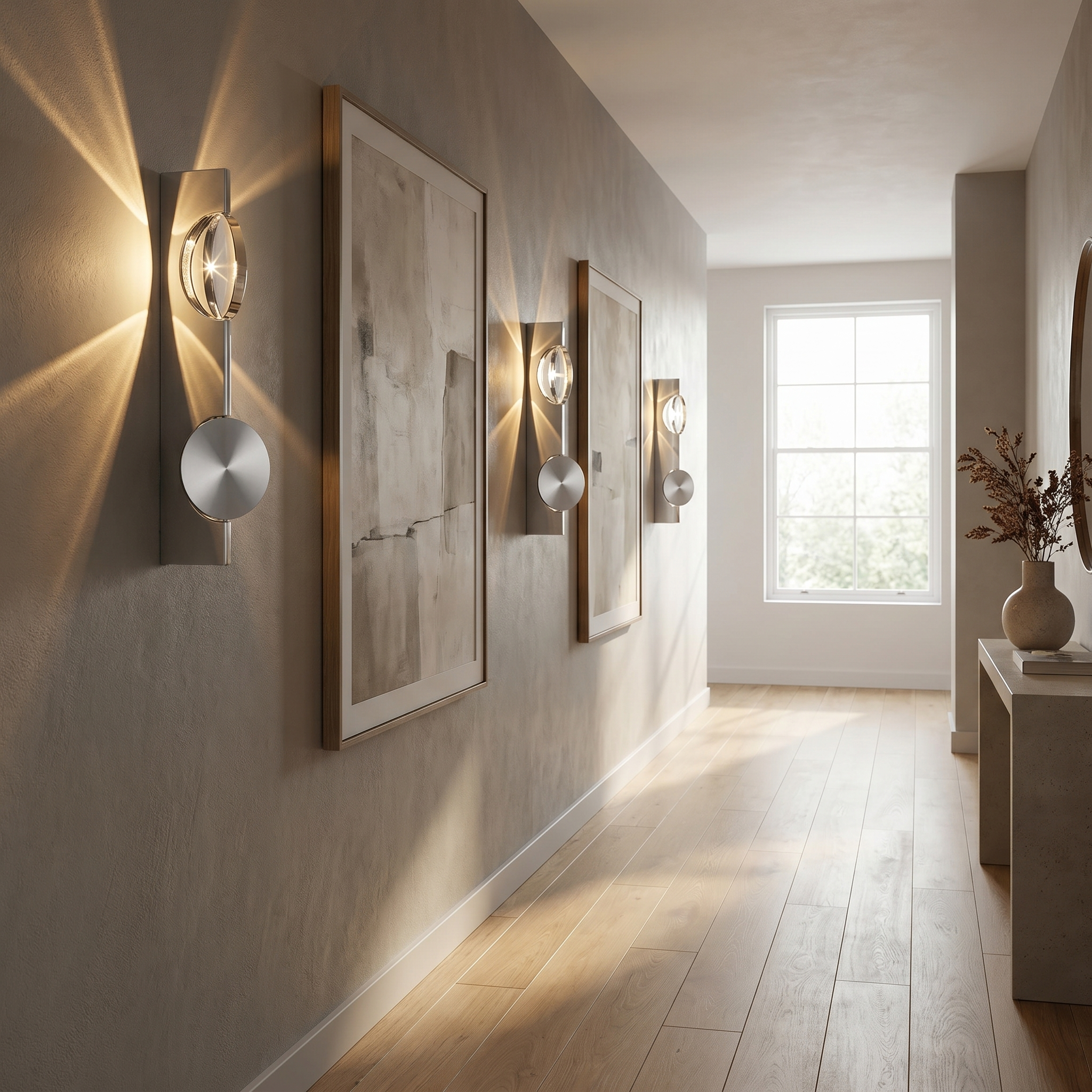
Yes — wall sconces mounted directly behind or above the headboard are increasingly popular as a design-led alternative to table lamps. This placement style is called a headboard sconce or panel sconce installation.
For behind-headboard placement:
- Mount sconces 4–8 inches above the headboard top
- Space them 20–30 inches apart (for a single sconce: centre it on the bed axis)
- Use sconces with shaded or frosted diffusers — bare bulbs directly behind a headboard create distracting glare
The visual effect is a floating light behind the headboard that reads as part of the bed design rather than a separate fixture. Crystal or glass sconces work particularly well here — the refracted light creates a soft halo effect against the headboard.
If it is the ceiling fixture rather than the walls that will carry the room, our best chandeliers for bedrooms roundup ranks eight in-stock fixtures by room size and ceiling height — the companion decision to sconce placement. Crystal sconces create the halo; a crystal chandelier becomes the centrepiece the halo frames.
Getting the ceiling fixture the right size matters just as much as sconce height. Our how to choose chandelier size guide has the room-by-room sizing table — diameter, hanging height, and drop length for dining rooms, foyers, bedrooms and low ceilings.
How to Wire Two Bedside Sconces to Separate Switches
For a shared bedroom, each sconce should operate independently. Three approaches in ascending complexity:
Separate plug-in sconces with inline switches — each sconce has its own cord and switch. No electrical work required. Each person controls their side independently. The cord routing is the only visual compromise.
Switched outlets — an electrician wires each bedside outlet to a wall switch (or smart switch). Plug-in sconces connect to these outlets and are controlled from the switch. Cleaner than in-line switches, no hardwiring of the sconce itself.
Individual hardwired circuits — fully hardwired sconces on separate switch circuits, one per side. The cleanest installation, most expensive. Ideal for new builds or full bedroom renovations.
For the simplest bedroom setup that most people want: plug-in sconces + inline switches, run the cord down behind a nightstand where it's concealed. Total install time: under 30 minutes per sconce, no tools beyond a stud finder and wall anchor.
Frequently Asked Questions: Bedroom Wall Sconces
“Home isn't just a place, it's your canvas.”
— Oliver, CEO & founder, Hausgem
How high should bedroom wall sconces be from the floor?
Mount bedroom wall sconces at 60–66 inches from the floor for standard beds. For bedside reading light, the more accurate rule is 30–36 inches above the top of your mattress — this positions the light at eye level when sitting up, preventing glare. Adjust up or down based on your specific bed height.
How far from the headboard should wall sconces be?
Position wall sconces 8–12 inches to the side of the headboard edge, not directly above the pillow. This spreads light across the reading zone rather than creating a single harsh pool. For queen beds, sconces typically land 38–42 inches from the bed's centre line on each side.
Do bedroom sconces need to be hardwired?
No. Plug-in wall sconces mount to the wall with a bracket and cord to a nearby outlet — no electrician required. Rechargeable battery sconces eliminate the cord entirely. Hardwired sconces look cleaner (no visible cord) but require professional installation. For renters or anyone who wants flexibility, plug-in or rechargeable is the practical choice.
What colour temperature should a bedroom wall sconce be?
Use 2700K–3000K (warm white). Cool white (4000K+) suppresses melatonin and disrupts sleep. The warm amber tone of 2700K mimics traditional incandescent light and signals to your body that it's time to wind down. Pair with a dimmer for maximum flexibility between reading brightness and sleep-mode ambiance.
Can you use a single sconce in a bedroom?
Yes. A single sconce works well for a single-occupant bedroom, a studio apartment, or a bedroom where one side of the bed is against the wall. Place it on the side the occupant reads from. If the bed floats in the room with access from both sides, two sconces are the better choice for symmetry and independent control.
What's the best sconce style for a minimalist bedroom?
A clean, geometric or disc-form sconce in brushed nickel, matte black, or warm brass suits minimalist bedrooms best. Avoid ornate crystal or heavily decorative forms — they interrupt the quiet visual palette minimalist design depends on. The Aurora Borealis Dual-Disc LED Wall Sconce ($149.99) is a strong option: architectural form, LED-integrated, no loose bulb to manage.
Can wall sconces replace bedside table lamps?
Yes — this is increasingly the preferred approach in contemporary bedroom design. Wall sconces free up nightstand surface space, create a cleaner visual line, and allow lower, more ambient ceiling light without the cord clutter of table lamps. The key is getting the height right (30–36 inches above the mattress) so the sconce functions as actual reading light, not just decoration.
Browse all Hausgem wall sconces →
*By Hausgem Editorial Team • Updated September 2026*
*All product specifications sourced from Hausgem product listings. Verify current dimensions and specifications on individual product pages.*